Workplace Safety and Team Training
Professional RF Safety and Team Training
RF Safety, Professional Standards, and Career Opportunities
Radiofrequency (RF) skin and body tightening is a widely used non-invasive aesthetic treatment that applies controlled RF energy to the dermis to support collagen and elastin production. RF procedures are commonly performed for skin tightening, facial rejuvenation, cellulite reduction, and body contouring on areas such as the face, neck, abdomen, arms, and thighs.
Strong RF education helps professionals and clinic teams understand consultation, candidate selection, controlled heat delivery, tissue response, treatment planning, documentation, and professional communication.
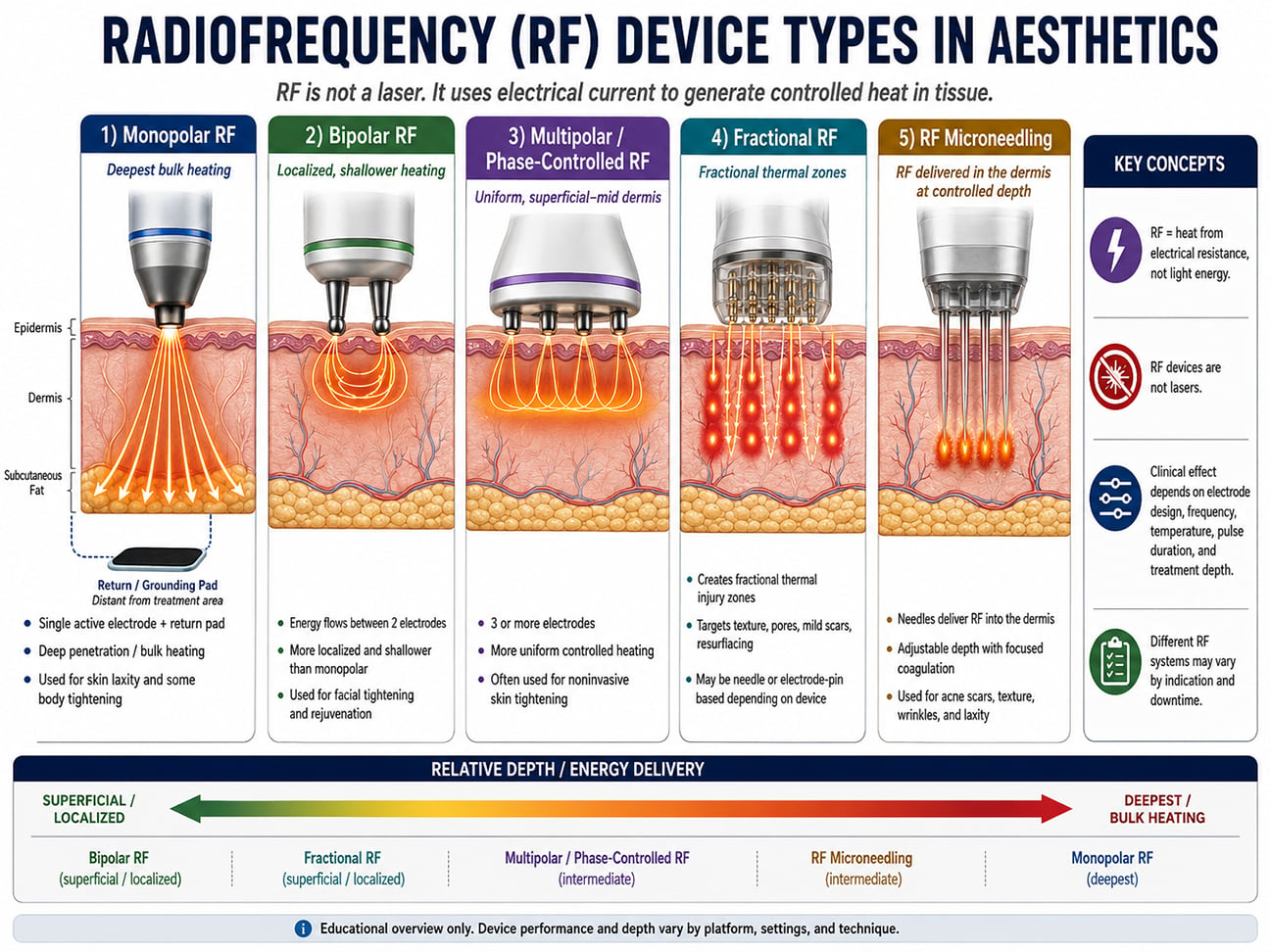
This 27-hour program emphasizes RF physics, controlled heat delivery, tissue response, contraindications, client assessment, thermal monitoring, clinical endpoints, aftercare, and safety protocols. The curriculum is taught by Anastasia Andreani and Dr. Leo J. Capobianco, D.O., FAAEM.
RF-trained professionals may work in medical spas, dermatology clinics, plastic-surgery practices, body-contouring studios, and aesthetic centers. A verifiable professional certificate helps document the education completed and supports continued career development.