Milwaukee cosmetic laser training with medical and aesthetic professionals overlooking the city
AML Laser Academy · Professional Online Education

Milwaukee Cosmetic Laser Training Courses

Build professional knowledge in cosmetic laser procedures through flexible online education for Milwaukee healthcare and aesthetic professionals. Study laser science, IPL, radiofrequency, tattoo removal, client safety, consultation, and Wisconsin regulatory considerations.

100% OnlineStudy from Milwaukee or anywhere in Wisconsin
Self-PacedBuild training around work, appointments, and family
Lifetime AccessReturn to enrolled course materials whenever needed
Verified CertificateProfessional completion record with a unique ID
LS
Laser SciencePhysics, skin typing, and treatment planning
SP
Safety PrinciplesHazard awareness and professional protocols
WI
Wisconsin ContextDelegation, supervision, and written protocols
ID
Certificate VerificationUnique AML Verification ID for graduates
Milwaukee, Wisconsin

Flexible, Medically Informed Education for Milwaukee Healthcare and Aesthetic Professionals

Milwaukee cosmetic laser training courses can help nurses, nurse practitioners, physician assistants, aestheticians, laser technicians, medical-spa professionals, practice owners, and career-focused learners build a stronger foundation in modern aesthetic technology.

Professional laser-science education Wisconsin regulatory context Verifiable AML certificate
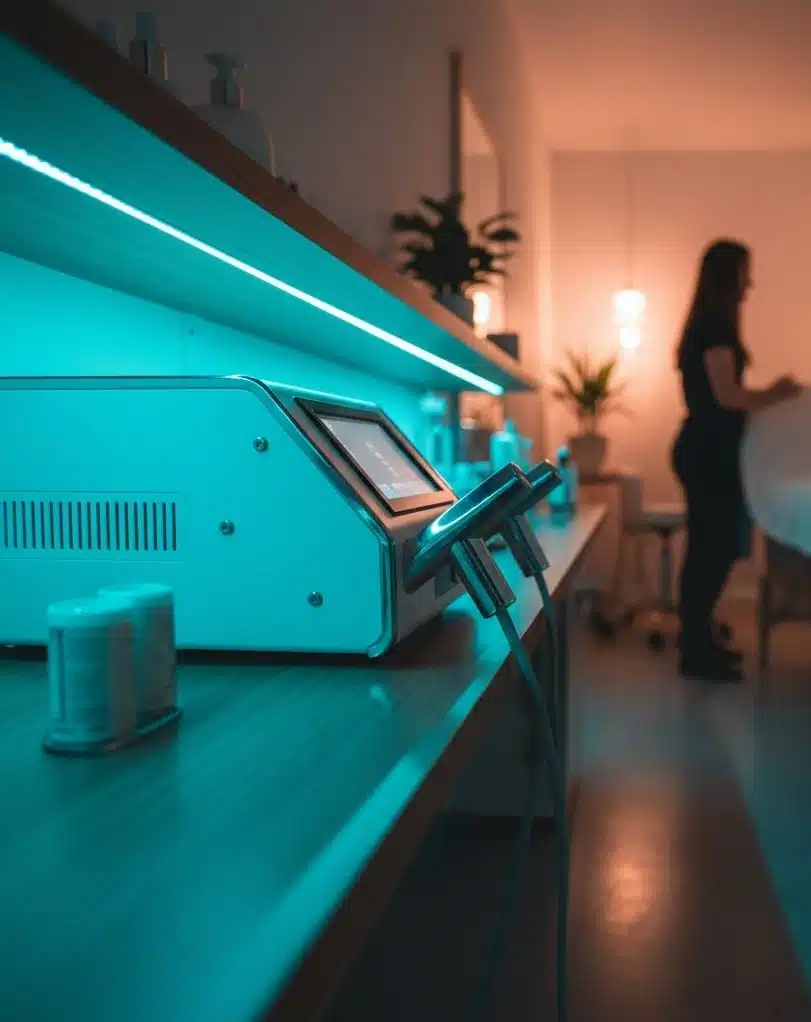
Milwaukee cosmetic laser and IPL treatment workstation
Industry and Regulatory Context

Important Wisconsin Regulatory Information

Wisconsin regulates aesthetics through the Department of Safety and Professional Services and the Cosmetology Examining Board. A standard Wisconsin aesthetician license generally requires at least 450 hours of approved education and successful completion of the required licensing examinations.

For licensees regulated by the Wisconsin Cosmetology Examining Board, laser hair removal is classified as a delegated medical procedure. Wisconsin rules state that delegated medical procedures must be directed, supervised, and inspected by a physician and performed under formal written protocols describing the nature and scope of the delegated procedure, the supervisory plan, and relevant contraindications.

The practitioner must also be properly licensed and competent through training or experience. Additional requirements may apply to the establishment, supervising physician, device, procedure, insurance coverage, employer, and the practitioner’s underlying professional license.

An AML Laser Academy certificate documents successful completion of the selected AML educational program. It does not independently create a Wisconsin license, expand a professional scope of practice, replace physician delegation, replace written protocols, satisfy every device-specific training requirement, or authorize a graduate to perform a regulated procedure.

How Wisconsin and Milwaukee Authority Is Divided

Wisconsin does not place every medical-aesthetics responsibility under one agency. The Wisconsin Department of Safety and Professional Services and the Cosmetology Examining Board regulate aestheticians, cosmetology credentials, and licensed aesthetics establishments. Wisconsin Administrative Code Cos 2.025 identifies laser hair removal as a delegated medical procedure for board-regulated licensees and requires physician direction, supervision, inspection, and formal written protocols.

The Wisconsin Medical Examining Board regulates physicians who may provide medical oversight or delegation, while the state's official license lookup allows employers, students, and clinic owners to verify professional and establishment credentials. A clinic or medical spa operating within the City of Milwaukee should separately review zoning and obtain the required Certificate of Occupancy before opening at a new or existing commercial location.

DSPSOfficial Wisconsin Sources
MDPhysician Oversight
WPWritten Protocols
DCDevice Competency
Milwaukee cosmetic laser training courses for healthcare and aesthetic professionals
Milwaukee Aesthetic Industry

Cosmetic Laser Training for Milwaukee’s Aesthetic Industry

Milwaukee’s aesthetic industry is closely connected to the region’s broader medical community. Cosmetic laser and energy-based treatments are commonly offered in medical spas, dermatology clinics, plastic-surgery offices, wellness practices, and other professional settings where patient safety, documentation, supervision, and treatment planning matter.

Flexible Professional Education

A Cosmetic Laser Training Program Built for Working Professionals

Traditional training may require fixed classroom dates, extended commutes, hotel stays, parking expenses, missed appointments, or time away from an existing job. AML gives Milwaukee students a flexible way to begin building advanced laser knowledge without waiting for a semester or local classroom schedule.

Study Around Work and Personal Responsibilities

Students can progress through the curriculum according to their own schedule. Complex subjects such as laser physics, skin typing, contraindications, consultation, treatment parameters, laser safety, and adverse-event awareness can be reviewed without being rushed through a single weekend seminar.

Replay Detailed Treatment Demonstrations

Treatment demonstrations can be paused, replayed, and reviewed. This allows students to revisit equipment preparation, client positioning, consultation flow, treatment concepts, safety steps, and pre- and post-treatment care.

Maintain Lifetime Course Access

Students receive lifetime access to their enrolled AML course materials. Lessons can be reviewed before manufacturer training, supervised practical education, workplace onboarding, a professional interview, a new service launch, or staff training.

Follow a Structured Curriculum

Depending on the program, coursework may include video lessons, written materials, treatment demonstrations, quizzes, assignments, professional resources, and final evaluations.

Earn a Verifiable Course-Completion Certificate

Eligible graduates receive an AML Laser Academy certificate containing the student’s name, course title, completion information, and a unique Verification ID. Employers and clinics can use AML’s verification system to confirm successful course completion.

Build Device-Agnostic Knowledge

AML focuses on core principles rather than limiting instruction to one equipment brand. This foundation can help students better understand terminology used across systems from manufacturers such as Alma, Candela, Cynosure, Lumenis, and other aesthetic-device companies. Manufacturer-led and device-specific instruction remains important before operating a particular system.

Why AML Laser Academy

Why Milwaukee Students Choose AML Laser Academy

Milwaukee IPL treatment room prepared for professional aesthetic services

Medically Informed Curriculum

Medical and laser-safety education supported by AML Medical Director Dr. Leo Capobianco, M.D., FAAEM.

Structured Professional Education

Laser physics, Fitzpatrick skin typing, treatment planning, consultation, contraindications, safety, and professional responsibility.

AML Laser Academy is designed for professionals and career-focused learners who value flexible access, medically informed education, and clear explanations of cosmetic laser technology.

Dr. Leo Capobianco, M.D., FAAEM, serves as AML Laser Academy’s Medical Director and supports the academy’s medically informed approach to cosmetic laser education, treatment safety, emergency awareness, and professional curriculum development.

Key features include:

Flexible Access and Review

  • Structured coursework for Milwaukee students and professionals
  • Flexible, self-paced study
  • Lifetime access to enrolled course materials

Laser Science and Consultation

  • Detailed treatment demonstrations
  • Laser physics and Fitzpatrick skin typing
  • Client consultation and contraindication education

Safety, Evaluation, and Verification

  • Laser safety and treatment-room risk awareness
  • Knowledge checks and final evaluations
  • Verifiable certificates with unique Verification IDs

Clinic and Staff Education

  • Individual enrollment and group rates for staff training
  • No requirement to travel to a physical AML campus
  • Medical Director support from Dr. Leo Capobianco, M.D., FAAEM
Milwaukee Course Options

Milwaukee Cosmetic Laser Course Options

Milwaukee cosmetic laser education and professional training environment
Most Comprehensive

Advanced Laser Aesthetics Certification

The Advanced Laser Aesthetics Certification is AML’s most comprehensive laser and advanced-aesthetics program. It combines education across several important treatment, consultation, safety, and skin-science subjects.

Core topics may include:

  • Laser and light physics
  • Selective photothermolysis
  • Fitzpatrick skin typing
  • Client consultation and contraindications
  • IPL and laser hair-reduction principles
  • Laser tattoo-removal principles
  • Radiofrequency skin and body concepts
  • IPL photofacial and skin-rejuvenation concepts
  • Microdermabrasion
  • Laser safety
  • Infection control and bloodborne pathogen awareness
  • Treatment planning
  • Expected tissue response
  • Pre- and post-treatment care
  • Professional documentation and responsibility

This program is well suited to learners seeking a broad theoretical and safety foundation before pursuing additional supervised hands-on training, employer education, manufacturer instruction, or Wisconsin-specific professional requirements.

RF microneedling and chemical peels may be referenced for comparison and broader advanced-skincare education. AML’s current Advanced Laser Aesthetics Certification does not include hands-on or certification training in RF microneedling or chemical peels.

View Advanced Laser Aesthetics
Specialty Course

IPL and Laser Hair Removal Certification

Laser hair removal and IPL hair reduction remain among the most recognized services in medical aesthetics. This course reviews:

View all course topics
  • Hair anatomy and hair-growth cycles
  • Melanin as a target chromophore
  • Fitzpatrick skin typing
  • IPL and wavelength concepts
  • Client screening and consultation
  • Contraindications and risk awareness
  • Treatment intervals
  • Expected skin responses
  • Preparation and aftercare
  • Long-lasting hair-reduction concepts
  • Why multiple treatments are commonly required

Laser and IPL hair reduction may be used across a range of skin types when appropriate technology, wavelength selection, treatment settings, cooling, and individual client assessment are used. Studying these concepts does not qualify a student to independently select device settings or perform treatments without the practical training, supervision, and legal authority required in Wisconsin.

View Hair-Removal Course
Specialty Course

Laser Tattoo Removal Certification

Laser tattoo removal requires knowledge of tattoo pigment, ink color, wavelength selection, skin typing, healing, treatment spacing, immune clearance, expected endpoints, and client expectations.

View all course topics

Course topics may include:

  • Tattoo-ink characteristics
  • Black, red, blue, green, and multicolored tattoo pigments
  • Wavelength principles
  • Q-switched and short-pulse terminology
  • Fitzpatrick skin typing
  • Post-inflammatory hyperpigmentation risk
  • Treatment intervals
  • Healing and aftercare
  • Contraindications
  • Adverse-event awareness
  • Client communication and realistic expectations

Device settings and tattoo-removal treatment techniques require supervised practical and manufacturer-specific training.

View Tattoo-Removal Course
Specialty Course

Radiofrequency Skin and Body Certification

Radiofrequency education introduces controlled tissue-heating concepts and the factors that influence treatment planning.

View all course topics

Students may review:

  • Radiofrequency physics
  • Controlled tissue heating
  • Temperature awareness
  • Contact and movement
  • Client selection
  • Skin-tightening concepts
  • Collagen-stimulation concepts
  • Body contouring
  • Non-invasive contouring
  • Body sculpting
  • Cellulite reduction planning
  • Contraindications
  • Pre- and post-treatment considerations

Radiofrequency technology is not a laser. Understanding the difference between laser energy, intense pulsed light, radiofrequency energy, and other aesthetic technologies is an important part of multi-modality education.

View Radiofrequency Course
Specialty Course

Laser Safety Officer Certification

Laser safety is essential in any environment where Class 3B or Class 4 laser systems may be used. The Laser Safety Officer course builds knowledge in:

View all course topics
  • Laser classifications
  • Controlled treatment areas
  • Warning signs and labels
  • Access control
  • Wavelength-specific protective eyewear
  • Optical density requirements
  • Beam and non-beam hazards
  • Skin and eye exposure
  • Plume and airborne contaminants
  • Electrical and fire safety
  • Standard operating procedures
  • Documentation
  • Maintenance awareness
  • Emergency response
  • Incident reporting
  • Laser Safety Officer responsibilities

The curriculum covers laser-safety principles addressed by ANSI Z136 standards for healthcare environments. Protective eyewear must match the wavelength and optical-density requirements of the specific device. Generic eyewear should never be assumed to provide protection for every laser or IPL system.

View Laser Safety Course
Specialty Course

Safety and Infection Control Course

This focused course supports safer treatment environments through education in:

View all course topics
  • Workplace safety
  • Treatment-room preparation
  • Cleaning and disinfection
  • Personal protective equipment
  • Cross-contamination prevention
  • Sharps awareness
  • Documentation
  • Incident response
  • Professional sanitation practices
  • Consistent staff procedures
View Safety Course
Specialty Course

Bloodborne Pathogens Certification

Bloodborne Pathogens Training covers:

View all course topics
  • Exposure-control principles
  • Bloodborne transmission risks
  • Universal precautions
  • Personal protective equipment
  • Sharps awareness
  • Exposure incidents
  • Workplace responsibilities
  • Documentation
  • Safer clinical practices
View BBP Course
Clinical Knowledge Foundations

Mastering Laser Treatments Through Structured Education

Professional laser education involves more than learning where to press a button. Students need to understand how laser and light energy interact with tissue, why treatment parameters matter, how clients are evaluated, and why practical competency and supervision are essential.

Laser Physics and Selective Photothermolysis

Students study how laser and light energy interact with target chromophores such as melanin, hemoglobin, water, and tattoo pigment.

View complete science topics

Important concepts include:

  • Energy absorption
  • Wavelength selection
  • Selective photothermolysis
  • Thermal relaxation time
  • Pulse duration
  • Fluence
  • Spot size
  • Repetition rate
  • Cooling mechanisms
  • Treatment endpoints
  • Tissue response

The curriculum may compare commonly used wavelength concepts, including 755 nm Alexandrite, diode wavelengths often used for hair reduction, and 1064 nm Nd:YAG technology. This education builds theoretical understanding and does not replace device-specific operating instruction.

Fitzpatrick Skin Typing and Skin Assessment

Skin type can influence technology selection, risk, and treatment planning. Students review how pigmentation, tanning history, recent sun exposure, medications, hormones, health history, previous treatment reactions, and treatment area may affect client assessment.

Client Consultation and Informed Consent

A professional consultation should consider more than a client’s desired result.

View complete science topics

Students review:

  • Client goals
  • Realistic expectations
  • Health history
  • Skin conditions
  • Active medications
  • Previous cosmetic procedures
  • Previous reactions
  • Contraindications
  • Treatment preparation
  • Treatment intervals
  • Informed consent
  • Aftercare
  • Documentation

Treatment Parameters

Different devices and treatment indications require different settings. Students learn why wavelength, fluence, pulse duration, spot size, cooling, skin type, treatment area, and tissue target may influence treatment planning.

View complete science topics

AML education does not qualify a student to independently select clinical settings without the device-specific education, supervised practical experience, professional authority, and workplace approval required for the procedure.

Contraindications and Adverse-Event Awareness

Coursework introduces client-screening concerns such as:

View complete science topics
  • Active infection
  • Photosensitivity
  • Recent tanning
  • Photosensitizing medications
  • Pregnancy considerations
  • Healing concerns
  • Inappropriate client selection
  • Unrealistic expectations

Students also review potential reactions and complications, including burns, blistering, pigment changes, prolonged redness, swelling, infection, eye injury, scarring, and unexpected tissue responses.

Treatment Technologies

Cosmetic Laser Procedures and Technologies Covered

Depending on the AML program selected, students may study several technologies used in modern aesthetic practices.

Cosmetic laser removal treatment in a professional medical spa setting

Laser and IPL Hair Reduction

Review hair-growth cycles, melanin targeting, skin typing, treatment intervals, preparation, contraindications, expected responses, aftercare, and long-lasting hair-reduction concepts. Most treatment plans require multiple sessions because hair grows in cycles.

IPL Photofacials and Skin Rejuvenation

Study broad-spectrum light concepts involving selected pigmentation concerns, vascular concerns, uneven tone, redness, photoaging, sun-damage appearance, facial treatments, client selection, treatment planning, and safety.

View full treatment details

IPL is not a laser. It uses broad-spectrum light rather than a single laser wavelength. IPL systems are commonly associated with hair reduction and selected photofacial applications.

Laser Tattoo Removal

Learn how tattoo pigment, ink color, skin type, wavelength selection, treatment spacing, immune clearance, expected endpoints, healing, and risk factors affect treatment planning.

Radiofrequency Skin Tightening and Body Contouring

Review controlled tissue heating, temperature awareness, contact, movement, treatment area, client suitability, non-invasive skin tightening, body contouring, body sculpting, and cellulite reduction concepts.

Microdermabrasion

Some AML programs introduce diamond-tip microdermabrasion, skin preparation, consultation, contraindications, treatment flow, and post-treatment care.

Laser Skin Rejuvenation and Resurfacing Concepts

Students may compare laser skin rejuvenation, fractional technology, ablative and nonablative resurfacing terminology, tissue interaction, recovery considerations, client assessment, pigmentation concerns, acne scarring, scar revision terminology, and treatment risks.

View full treatment details

Studying laser resurfacing, scar revision, vascular-lesion treatment, or another advanced modality does not establish legal authority or clinical competency to perform it. AML does not provide live-model training in ablative laser procedures.

Wisconsin Compliance Path

Wisconsin Laser Rules and Professional Requirements

Wisconsin does not have one stand-alone “laser technician license” that automatically applies to every person and every procedure. Professional authority depends on the practitioner’s underlying credential, the treatment being provided, the setting, physician involvement, written protocols, training, and other applicable rules.

For Wisconsin Cosmetology Examining Board licensees, laser hair removal is a delegated medical procedure. Important requirements include:

1

Appropriate Professional Credential
The practitioner must hold the license or professional authority required for the service being provided.

2

Physician Direction, Supervision, and Inspection
Delegated medical procedures provided by cosmetology-board licensees must be directed, supervised, and inspected by a physician with authority to oversee the services.

3

Formal Written Protocols
Delegated procedures must be performed under written protocols defining the nature and scope of the procedure, the supervisory plan, and relevant contraindications.

4

Training and Competency
Practitioners may provide only services they are competent to perform through training or experience and are licensed to provide.

5

Proper Establishment and Workplace Requirements
Wisconsin requires establishments where aesthetics is practiced to hold the appropriate establishment credential. Medical practices and medical spas should also verify any additional facility, delegation, ownership, insurance, and professional-board requirements that apply.

6

Device-Specific and Practical Training
A course-completion certificate should be paired with appropriate supervised hands-on education, manufacturer instruction, workplace protocols, and demonstrated competency before operating professional equipment.

7

Ongoing Verification
Rules may change. Students should verify current requirements with Wisconsin DSPS, the board governing their professional license, their employer, supervising physician, insurer, and legal counsel when needed.

Wisconsin Education Options

Wisconsin Aesthetician Education Pathways

Wisconsin generally requires at least 450 hours of approved aesthetician education for initial licensure, followed by the required state examinations and application process.

Milwaukee-area learners may compare several education pathways:

These options serve different purposes. A Wisconsin licensing program establishes the education needed for an aesthetician credential. AML provides specialized cosmetic laser, IPL, radiofrequency, safety, consultation, and treatment-theory education. Employer and manufacturer training help build practical device competency.

Students may combine different forms of education as part of a broader professional-development plan, but they should never assume that one certificate replaces every state, employer, device, facility, or supervision requirement.

Milwaukee Area Technical College aesthetician programsMATC advanced skincare and aesthetic-device educationWaukesha County Technical College Master Aesthetician programWCTC hands-on aesthetic educationPrivate aesthetic schoolsEmployer-based trainingDevice-manufacturer educationSupervised clinical instructionAML Laser Academy coursework
How the Program Works

How AML Training Works

Step 1: Choose Your Program

Select the comprehensive Advanced Laser Aesthetics Certification or an individual specialty course based on your goals.

Step 2: Receive Course Access

After enrollment, students receive access to the AML learning platform and can begin without waiting for a semester or fixed classroom date.

Step 3: Complete Structured Lessons

Work through video lessons, written materials, treatment demonstrations, quizzes, assignments, and professional course resources at your own pace.

Step 4: Pass the Required Evaluation

Complete the assessments and final evaluation required for the selected program.

Step 5: Receive Your AML Certificate

Eligible graduates receive a digital AML Laser Academy certificate with a unique Verification ID.

Step 6: Continue Building Practical Experience

Students who need hands-on training arrange supervised practical education through an employer, qualified school, clinic, supervising healthcare professional, or equipment manufacturer.

Who Should Attend

Who Milwaukee Cosmetic Laser Training Is For

Registered Nurses and Nurse Practitioners

Build knowledge of laser and light physics, skin typing, consultation, contraindications, client assessment, safety, treatment planning, and medical-spa operations while confirming the scope and delegation rules that apply to your nursing credential.

Physicians and Physician Assistants

Strengthen understanding of energy-based aesthetic treatments, client selection, treatment risks, safety systems, delegation, professional oversight, and practice development.

Licensed Aestheticians and Cosmetologists

Build a stronger foundation in laser hair removal, IPL, skin rejuvenation, tattoo removal, radiofrequency, treatment planning, and laser safety while following Wisconsin physician-supervision and written-protocol requirements where they apply.

Medical Assistants and Allied Health Professionals

Learn terminology, room preparation, client-support concepts, infection control, documentation, workplace safety, and treatment-flow principles. Professional authority to perform procedures depends on the individual’s credential and applicable Wisconsin law.

Laser Technicians and Medical-Aesthetic Professionals

Refresh existing knowledge or study additional modalities such as IPL, tattoo removal, radiofrequency, photofacials, body contouring, laser safety, and professional treatment planning.

Medical-Spa Owners and Clinic Managers

Create more consistent staff education across providers, managers, consultants, treatment coordinators, front-office teams, and designated safety personnel.

Career Changers and Beginners

Many AML courses are suitable for motivated beginners. No prior laser experience is required for many programs, but course completion does not eliminate Wisconsin licensing, practical training, supervision, device competency, or employer requirements.

Professionals Preparing for Manufacturer Training

Build a science and safety foundation before beginning equipment-specific instruction or workplace onboarding.

Career Opportunities

Career Opportunities in Milwaukee Medical Aesthetics

Cosmetic laser education may support career development in settings such as:

  • Physician-led medical spas
  • Dermatology practices
  • Plastic-surgery offices
  • Medical-aesthetic clinics
  • Wellness practices
  • Laser hair-removal businesses
  • Skin-care clinics
  • Multi-location aesthetic companies
  • Device manufacturers and distributors
  • Clinic safety and compliance roles
Nurses and medical professionals walking in downtown Milwaukee
Course Investment

Cosmetic Laser Training Cost and Course Investment

Cosmetic laser training cost varies according to the program, depth of education, technology covered, practical requirements, equipment access, and certificate type.

AML students can choose one focused course or a broader multi-modality program. Current course prices and payment options should be reviewed on AML’s tuition and course-pricing page before enrollment.

The standard digital course-completion certificate is included for eligible graduates. Optional mailed, replacement, or specialty physical certificate services may have separate terms or fees.

Rather than selecting a program only because it is the cheapest or shortest option, students should compare:

Curriculum

  • Curriculum depth
  • Treatment modalities covered
  • Laser safety education

Credentials

  • Instructor and medical oversight
  • Treatment demonstrations
  • Practical-training availability

Professional Requirements

  • Certificate verification
  • Lifetime access
  • Employer expectations

Practical Planning

  • Wisconsin regulatory requirements
  • Device-specific education
  • Group rates for staff training
Milwaukee medical spa treatment room for clinic staff training
Group Rates Available Clinic and Staff Education

Group Rates for Milwaukee Medical Spas and Staff Training

AML offers group-training options for medical spas, dermatology practices, plastic-surgery offices, wellness clinics, cosmetic practices, and multi-location businesses.

Group rates for staff training can help practices create a more consistent educational foundation across providers, managers, treatment coordinators, front-office employees, and safety personnel.

Request Group Training Rates

Team education can support:

  • Consistent laser-safety terminology
  • Stronger consultation and contraindication awareness
  • Improved infection-control practices
  • More professional employee onboarding
  • Shared treatment and documentation concepts
  • Better preparation for manufacturer education
  • Support for Laser Safety Officer responsibilities
  • Long-term access for workplace review
  • Consistent education across multiple locations

Group packages are available for teams of three to five employees, along with an unlimited-staff training option for larger organizations.

Milwaukee and Southeastern Wisconsin

Milwaukee and Southeastern Wisconsin Service Area

AML coursework is available to students throughout Milwaukee and surrounding communities, including:

Students can study from home, work, or an existing practice without commuting to a physical AML campus. Those seeking local live-model education should separately compare qualified Wisconsin schools, employers, clinics, and manufacturer-led training opportunities.

Downtown MilwaukeeHistoric Third WardEast SideBay ViewWalker’s PointWauwatosaWest AllisGreenfieldOak CreekFranklinGlendaleShorewoodWhitefish BayBrookfieldNew BerlinWaukeshaMequonGermantownRacineKenosha
Milwaukee Laser Training FAQ

Frequently Asked Questions

Which authorities oversee cosmetic laser and aesthetics work in Milwaukee?

The Wisconsin Department of Safety and Professional Services and Cosmetology Examining Board regulate aesthetician and establishment credentials. The Wisconsin Medical Examining Board regulates physicians, and Wisconsin Administrative Code Cos 2.025 addresses delegated medical procedures such as laser hair removal for board-regulated licensees. The City of Milwaukee separately administers zoning, permits, and Certificates of Occupancy for business locations.

Can I complete AML cosmetic laser training from Milwaukee?

Yes. Milwaukee students can access AML coursework through the academy’s learning platform from any compatible device with a reliable internet connection.

Does AML operate a physical laser school in Milwaukee?

No. AML Laser Academy does not operate a physical Milwaukee campus.

Does AML provide live hands-on training in Wisconsin?

No. AML courses include detailed treatment demonstrations and technical education. Students arrange supervised hands-on training separately through qualified schools, employers, clinics, healthcare professionals, or device manufacturers.

How long does an AML cosmetic laser course take?

Completion time depends on the selected course and the student’s schedule. Many students finish within one to three weeks, while others choose a slower pace.

Do I need prior laser experience?

Many AML programs are suitable for beginners. Certain medical or advanced subjects may have prerequisites, so students should review the specific course before enrolling.

Will I receive a cosmetic laser certification?

Eligible students who successfully complete the selected program receive an AML Laser Academy course-completion certificate with a unique Verification ID. The certificate is different from a Wisconsin professional license and does not independently authorize regulated practice.

Does Wisconsin have a laser technician license?

Wisconsin does not use one universal stand-alone laser technician license for every practitioner and procedure. Authority depends on the person’s underlying credential, the procedure, physician involvement, written protocols, training, competency, establishment requirements, and other applicable rules.

Can a Wisconsin aesthetician perform laser hair removal?

For licensees regulated by the Wisconsin Cosmetology Examining Board, laser hair removal is a delegated medical procedure. It must be performed under physician direction, supervision, and inspection, pursuant to formal written protocols, and within the practitioner’s professional authority and competency.

How many education hours are required for a Wisconsin aesthetician license?

Wisconsin generally requires at least 450 hours of approved aesthetician education for initial licensure, along with the required examinations and application process.

Does AML replace MATC, WCTC, or a Wisconsin aesthetician program?

No. MATC, WCTC, and other approved schools serve different educational and licensing purposes. AML provides specialized cosmetic laser, IPL, radiofrequency, safety, and treatment-theory education.

Does AML provide job placement in Milwaukee?

AML does not promise job placement or employer introductions. The education can strengthen a student’s knowledge and resume, but employment depends on licensing, practical experience, professional competency, employer requirements, and market conditions.

Are AML courses worth considering before hands-on training?

Yes. Building a foundation in laser physics, skin typing, consultation, contraindications, safety, treatment planning, and expected tissue response can help students better understand later manufacturer or supervised practical education.

Can a Milwaukee medical spa enroll several employees?

Yes. AML offers group rates and staff-training options for small teams and larger organizations.

Does an AML certificate authorize me to perform ablative laser resurfacing or scar revision?

No. Studying terminology and treatment concepts does not establish legal authority or hands-on competency. Ablative laser resurfacing, scar revision, and other advanced procedures require the appropriate professional authority, clinical education, device training, supervision, and workplace approval.

Will I have lifetime access?

Yes. AML students receive lifetime access to their enrolled course materials for ongoing review.

Explore More AML Locations

Compare Cosmetic Laser Training in Other Cities

Browse AML Laser Academy's city-specific training guides for medical and aesthetic professionals across the United States. Compare official regulatory resources, local professional pathways, career context, and flexible online cosmetic laser education in additional markets.

View All AML Training Locations
Milwaukee Career Education

Start Your Milwaukee Cosmetic Laser Training

Milwaukee professionals do not need to wait for a fixed classroom date to begin building advanced cosmetic laser knowledge.

Choose the AML program that matches your educational goals, study laser physics, skin typing, consultation, IPL hair reduction, tattoo removal, radiofrequency, photofacial treatments, laser safety, infection control, and professional treatment planning, and then continue building the practical experience and Wisconsin-specific qualifications required for your intended role.

View Milwaukee cosmetic laser course options and current tuition.