

Is the course fully online?
Yes. The coursework is delivered 100% online and is self-paced, making it easier to study around a hospital, clinic, or private-practice schedule.
AML Laser Academy
A 45-hour, self-paced Botox certification course and dermal filler training program covering facial anatomy, botulinum toxin pharmacology, patient assessment, treatment planning, injection safety, complication awareness, and a professional course-completion certificate for licensed healthcare professionals.
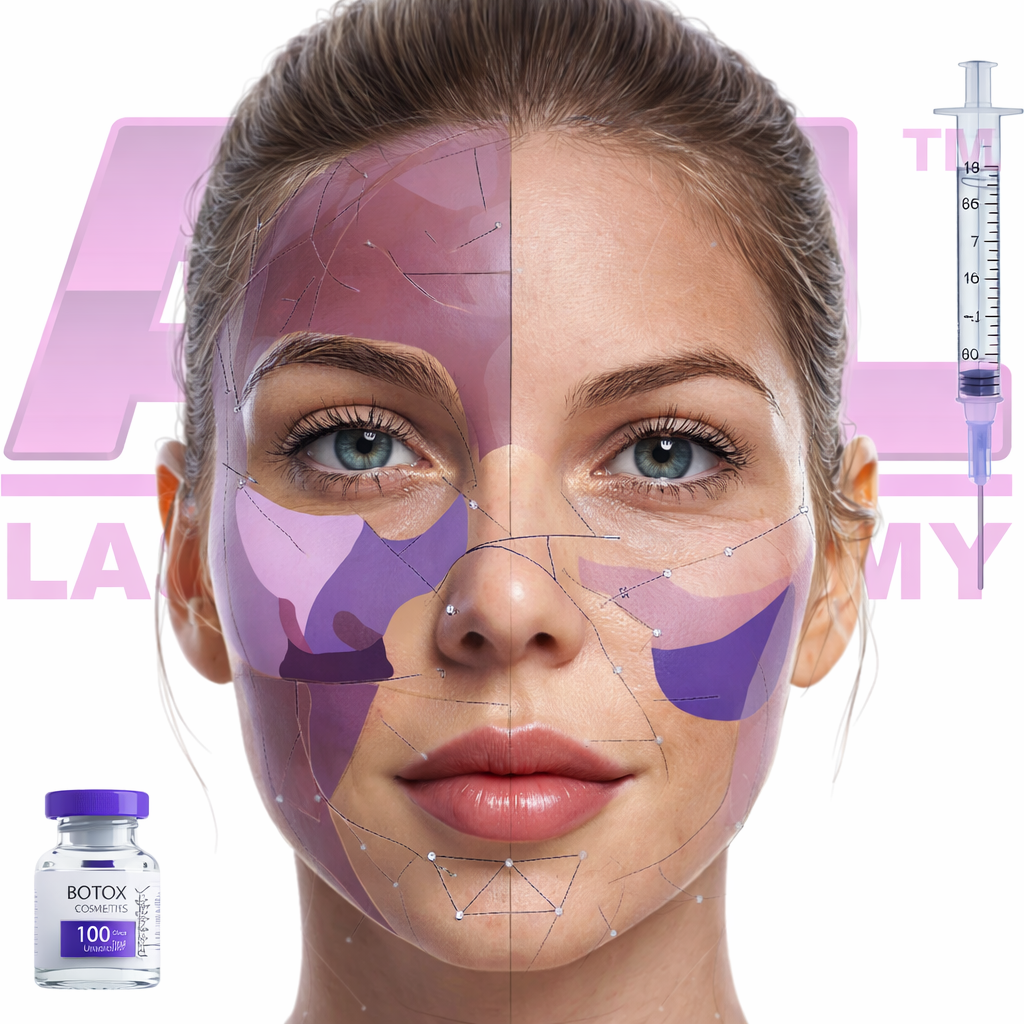
Botox® (onabotulinumtoxinA) and dermal fillers are among the most in-demand aesthetic procedures in modern medical aesthetics. As patient demand continues to grow, healthcare professionals are expanding into cosmetic injectables to diversify their services, develop cash-pay revenue opportunities, strengthen patient retention, and enter the rapidly growing medical aesthetics industry.
This 45-hour Botox and dermal fillers course online, often searched as a Botox certification course, is designed for medical professionals seeking structured education in aesthetic injectables. The program includes a didactic component covering the theoretical foundations of neurotoxins and dermal fillers, botulinum toxin training, dermal filler training, facial anatomy, consultation, infection control, treatment planning, and complication awareness before supervised hands-on application.
See why this flexible online program is a practical first step for medical professionals who want to enter aesthetic medicine, expand an existing practice, or add a high-demand injectable service line.
Yes. The coursework is delivered 100% online and is self-paced, making it easier to study around a hospital, clinic, or private-practice schedule.
It is designed for physicians, registered nurses, nurse practitioners, physician assistants, dentists, and other qualified medical professionals entering or expanding within aesthetic medicine.
Training includes facial anatomy, neurotoxins, dermal fillers, patient consultation, treatment planning, infection control, facial balancing, complication awareness, documentation, and aftercare.
Injectables can support practice diversification, repeat patient relationships, cash-pay service development, greater scheduling flexibility, and a gradual transition into medical aesthetics.
Yes. Many physicians begin by adding aesthetic consultations and injectable services alongside their current medical work rather than making an immediate, full-time career change.
Yes. The course is taught by Anastasia Andreani and Dr. Leo J. Capobianco, D.O., FAAEM. Dr. Capobianco serves as Chief Medical Officer, Medical Director, Medical Instructor, and Medical Reviewer.
This injectable training program is designed to provide a deep understanding of aesthetic medicine, neurotoxins, dermal fillers, facial assessment, treatment planning, and clinical application concepts.
You will develop a deep understanding of how to evaluate the face both at rest and during movement to achieve natural results.
Clinical thinking, facial assessment, and patient safety remain central throughout the program.This Botox training course compares frequently used neuromodulator brands and explains why providers must understand product characteristics, muscle strength, patient response, treatment goals, and product-specific dosing concepts.
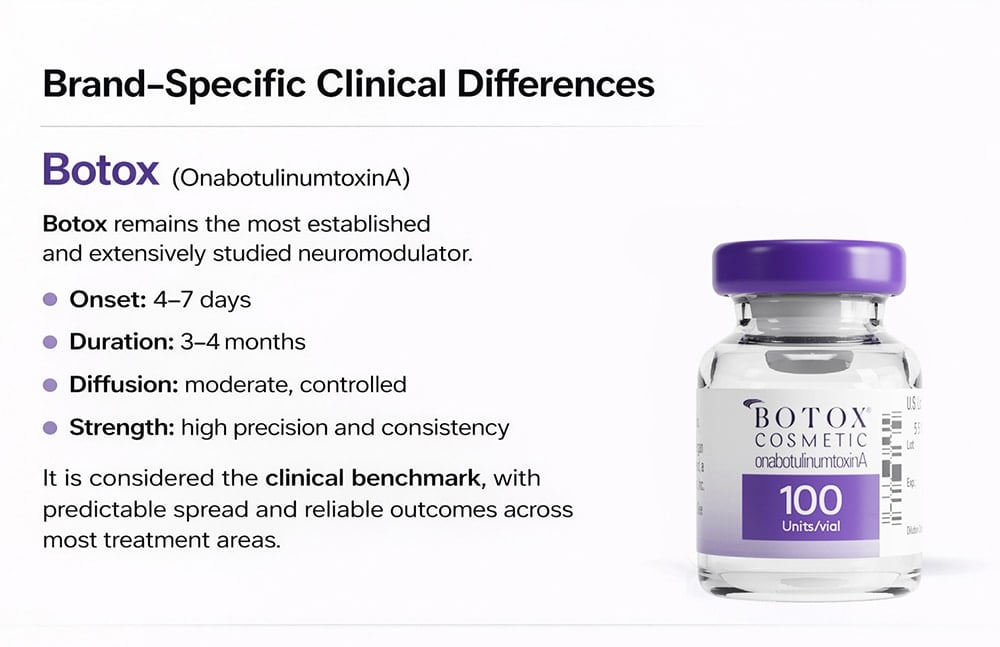


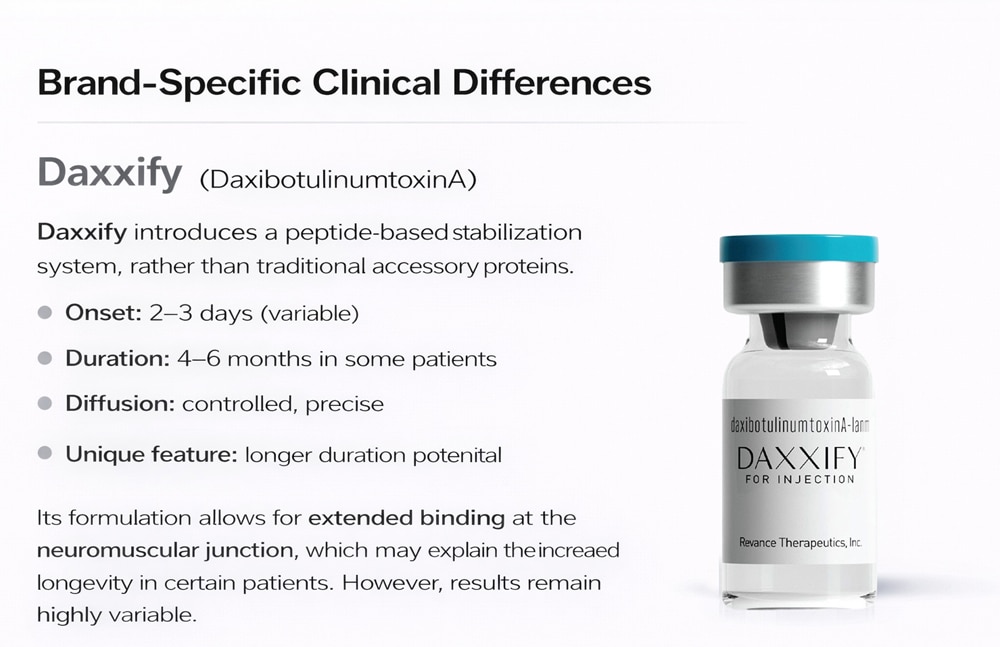
Botulinum toxin products and dermal fillers are different treatment categories. This course explains how their mechanisms, assessment considerations, treatment goals, and safety concerns differ.
Online education allows busy medical professionals to build a strong foundation in facial anatomy, product science, consultation, safety, and treatment planning before moving into supervised practical training. This program functions as flexible Level 1 foundational training rather than a single one-day workshop, allowing students to revisit lessons as their knowledge develops.
Brand names are used for educational comparison. Product formulations, labeling, reconstitution, and potency units are product-specific and are not interchangeable.

This 45-hour course is designed to help licensed healthcare professionals build foundational injection knowledge, strengthen clinical decision-making, and prepare for advanced aesthetic education and professional practice.
Medical professionals often compare Botox certification training based on curriculum depth, hands-on pathways, instructor credentials, and the type of certificate awarded. This AML program provides a professional course-completion certificate for the 45-hour online curriculum.
Course Content Overview
Review the complete module outline covering injectable aesthetics, infection control, anatomy, product science, patient assessment, safety, neurotoxins, dermal fillers, and post-treatment management.


Patient safety is critical in all aesthetic procedures.
This course emphasizes:
Adverse events may involve patient factors, product characteristics, facial anatomy, dose, placement, injection technique, or post-treatment response. Careful assessment, appropriate training, and early recognition are essential.
Modern aesthetic practice often relies on Botox dermal filler treatment planning, with combination treatments used to address dynamic movement, volume, structure, and facial balance.
By learning both Botox and dermal filler techniques together, providers can:
This Botox and dermal filler training course is delivered fully online, allowing medical professionals to learn at their own pace instead of being limited to a fixed 8-hour certification format or a single course date.
In traditional medicine, providers follow protocols. In aesthetic medicine, providers must adapt to each patient.
For example, correcting subtle asymmetry in the masseter or brow requires precise dose control, depth awareness, and understanding of muscle compensation patterns.
These real-world insights are a key part of this injectable training course.
This Botox and dermal filler certification course is taught by Anastasia Andreani and Dr. Leo J. Capobianco, D.O., FAAEM, with Dr. Capobianco providing medical instruction, patient-safety guidance, complication-management education, and curriculum review.
The course reflects how treatments are performed in real clinical environments, not just theoretical instruction.
This course focuses on injection training used in actual aesthetic practice, beginning with a didactic component on neurotoxins and dermal fillers before supervised hands-on application:
This approach allows providers to achieve natural, consistent outcomes.
This course provides the didactic training foundation required before moving into hands-on training.
Many providers continue into advanced training, including:
Small group breakout sessions and hands-on training are recommended as the next step.
This Botox and filler certification course is intended for licensed healthcare professionals entering or expanding within aesthetic medicine, including:

Physicians already possess many of the strengths that matter most in aesthetic medicine: advanced anatomy knowledge, clinical judgment, patient communication, informed consent, documentation, and the ability to recognize complications. Injectable-aesthetics education helps translate those strengths into a growing area of modern medical practice.
For doctors seeking a more flexible professional path, a new cash-pay service line, or a gradual transition away from the demands of traditional practice, neurotoxins and dermal fillers can offer a compelling direction. You can begin building knowledge while continuing your current specialty, then expand as your confidence, practical training, and patient demand grow.
Injectable-aesthetics education can support opportunities in:
Many medical professionals begin by adding injectables to an existing role, then expand into leadership, partnership, or practice ownership as demand grows.
This didactic training introduces the clinical considerations associated with common aesthetic procedures:
Understanding both neurotoxins and dermal fillers is essential for modern aesthetic practice.

Botox and dermal filler treatments can become a valuable addition to a medical or aesthetic practice because they support:
Income potential varies by patient demand, provider experience, treatment pricing, product costs, overhead, repeat visits, and the strength of the practice. The greatest long-term opportunity often comes from trusted patient relationships, consistent outcomes, and a well-developed treatment menu.
Combines Botox training and dermal filler certification
Focuses on patient safety and real clinical practice
Structured learning with clear progression from didactic training to advanced education
Designed for long-term success in aesthetic medicine
Most training courses teach techniques. This course teaches clinical thinking.
Demand for minimally invasive aesthetic treatments continues to expand, creating new opportunities for qualified medical professionals who combine clinical knowledge with strong consultation skills and a patient-centered treatment approach.
ISAPS reported that global surgical and nonsurgical aesthetic procedures approached 38 million in 2024.
View ISAPS statisticsTotal aesthetic procedure volume increased by approximately 40% worldwide between 2020 and 2024, according to ISAPS.
Review the global reportBotulinum toxin and hyaluronic-acid treatments remain among the most frequently performed nonsurgical aesthetic procedures worldwide.
Open the ISAPS surveyIndustry research estimated the U.S. aesthetic-injectables market at about $4.1 billion in 2024, with projected annual growth of 11.2% through 2030.
View market researchYes. The program is delivered 100% online and is self-paced, allowing busy physicians and medical professionals to study around their existing work schedule.
Yes. It provides physicians with a structured foundation in facial anatomy, neurotoxins, dermal fillers, consultation, treatment planning, safety, documentation, and complication awareness before practical skill development.
Yes. Injectable-aesthetics knowledge can support the development of elective cash-pay services, stronger patient retention, cross-service opportunities, and a gradual expansion into medical aesthetics.
Yes. The course is designed for physicians, registered nurses, nurse practitioners, physician assistants, dentists, and other qualified medical professionals.
The curriculum covers facial anatomy, neurotoxin and filler concepts, patient consultation, treatment planning, product selection principles, injection-safety concepts, complication awareness, aftercare, and documentation.
Neurotoxins address selected muscle activity, while dermal fillers support volume and facial structure. Understanding both helps providers think in terms of full-face assessment and more complete aesthetic treatment planning.
Yes. The online program helps students build vocabulary, anatomy knowledge, consultation skills, product awareness, and clinical reasoning before participating in supervised practical education.
Injectable services are often delivered through ongoing treatment plans and maintenance visits, which can support long-term patient relationships and repeat business when services are provided appropriately.
Yes. Safety remains an important part of the curriculum, including facial anatomy, contraindications, infection control, vascular-risk awareness, adverse-event recognition, documentation, and escalation concepts.
Yes. Students can review lessons on their own schedule and revisit the material as they prepare for practical training or expand their aesthetic services.
The course discusses Botox®, Dysport®, Xeomin®, Jeuveau®, and Daxxify® for educational comparison, including product characteristics, treatment-planning concepts, and the importance of product-specific labeling and dosing.
Yes. Students who successfully complete the 45-hour online program receive a verifiable professional course-completion certificate documenting their education in neurotoxins and dermal fillers.
The program provides a professional course-completion certificate for the 45-hour online curriculum. CME or CE credit is not included unless AML identifies a separately approved offering.
Demand for neurotoxins, dermal fillers, facial balancing, and minimally invasive aesthetic treatments continues to grow.
If you are ready to enter medical aesthetics, expand your injectable skills, diversify an existing practice, or develop a new cash-pay service line, this neurotoxins and dermal fillers course online provides the structured foundation to begin your next stage of professional development.

Anastasia Andreani, Founder, President, Director of Education and Instructor, and Dr. Leo J. Capobianco, D.O., FAAEM, Chief Medical Officer, Medical Director, Medical Instructor and Medical Reviewer, teach the course. The 45-hour program is designed for licensed medical professionals and awards a verifiable professional course-completion certificate.
Study facial anatomy, neurotoxins, dermal fillers, patient assessment, injection safety, clinical decision-making, complication awareness, and treatment planning through a structured 45-hour online course.