
Academic Mastery
Build strong scientific, safety, consultation, and treatment-theory knowledge through flexible AML coursework.
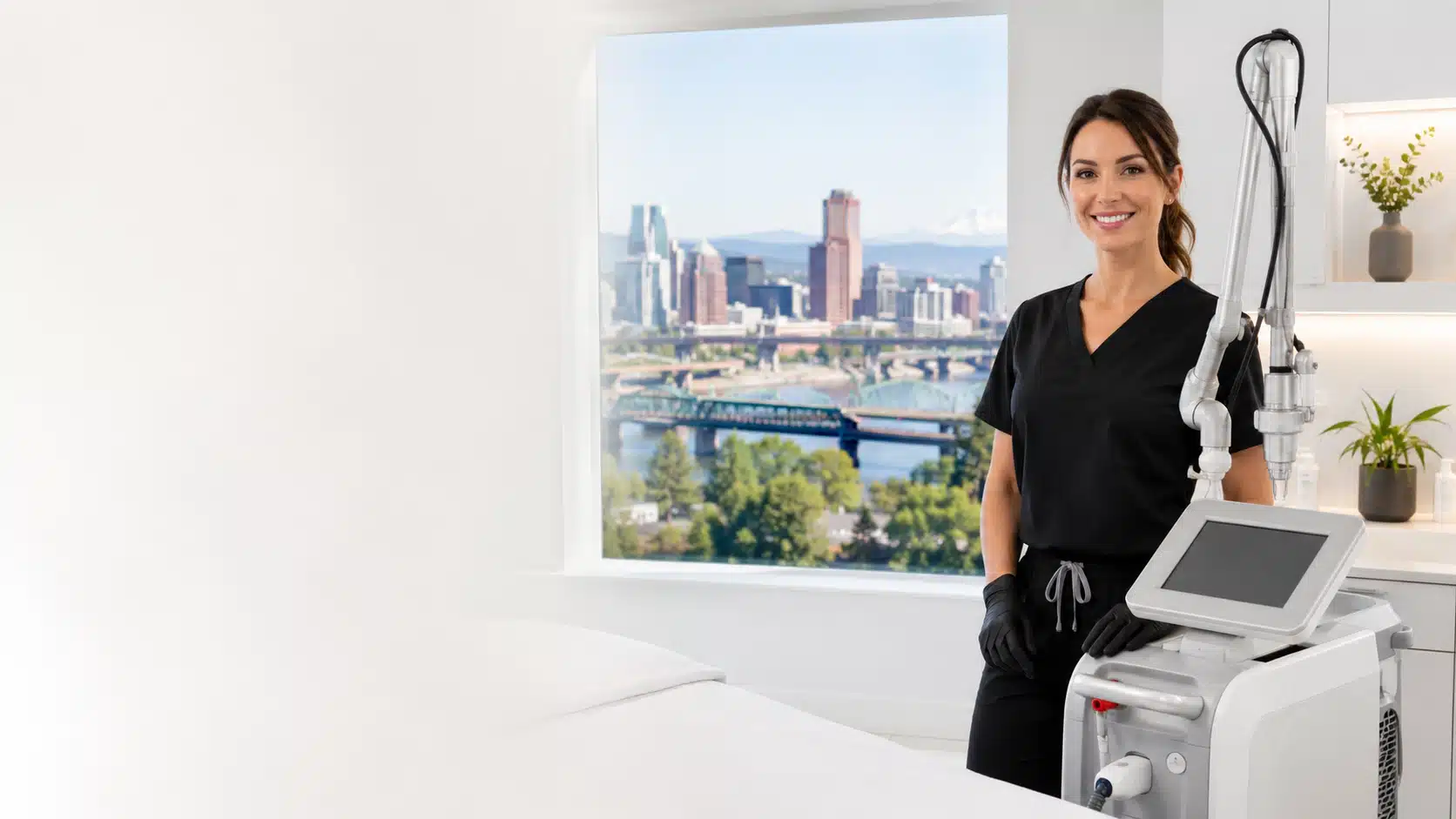
Portland Medical Aesthetics Education
Develop a deeper understanding of laser science, treatment planning, IPL hair reduction, tattoo removal, radiofrequency, photofacial concepts, and clinical safety—built for Portland professionals balancing work, patients, and career growth.
Oregon Students
Important Regulatory InformationOregon has a defined certification pathway for professionals performing advanced nonablative esthetic procedures. AML education is designed to strengthen theoretical knowledge and professional preparation. It does not replace Oregon's required 500-hour career-school curriculum, practical work, completed procedures, written examination, facility requirements, collaborative agreement, or Certified Advanced Esthetician credential.
Official guidance is available through the Oregon Health Authority Health Licensing Office and the Board of Certified Advanced Estheticians.
Flexible, Medically Informed Education
A strong cosmetic laser education begins with understanding the science, safety, consultation standards, treatment concepts, and professional responsibilities behind energy-based aesthetic procedures.
AML Laser Academy provides Portland students with structured education designed to strengthen their understanding of modern cosmetic laser and light-based technologies. Depending on the course selected, students may study laser hair reduction, IPL, tattoo removal, radiofrequency, photofacial treatments, microdermabrasion, laser safety, infection control, and bloodborne pathogen awareness.
Students who successfully complete the requirements of an AML course receive a professional course-completion certificate containing their name, course title, completion information, and a unique Verification ID that employers and clinics can use to verify successful AML course completion.
Build strong scientific, safety, consultation, and treatment-theory knowledge through flexible AML coursework.
Complete the separate Oregon education, practical work, procedures, written examination, certification, facility, and collaborative-agreement requirements that apply before professional practice.
Flexible Learning Advantages
Progress through laser physics, skin typing, contraindications, consultation, and laser safety around work and personal responsibilities.
Pause and review positioning, consultation, treatment concepts, equipment preparation, and professional treatment flow.
Return to enrolled materials before manufacturer training, workplace onboarding, staff education, or a new treatment launch.
Learn through written lessons, video lectures, treatment demonstrations, knowledge checks, assignments, resources, and final evaluations.
Eligible graduates receive an AML certificate containing a unique Verification ID.
Study without airfare, lodging, downtown parking, long commutes, or time away from an existing job or practice.
Medical Curriculum Leadership
Dr. Leo Capobianco, M.D., FAAEM serves as AML Laser Academy's Medical Director and supports the academy's medically informed approach to cosmetic laser education, treatment safety, emergency awareness, and professional curriculum development.
AML courses build knowledge and professional preparation. They do not independently grant an Oregon license, state certification, legal scope of practice, facility authorization, or permission to perform a cosmetic procedure.
Device-Agnostic Foundations: AML teaches core laser science, safety, consultation, and treatment concepts that can help students better understand terminology used across leading clinical systems, including Alma, Candela, Cynosure, and Lumenis. Manufacturer-led and device-specific training remains important before operating individual equipment.
Course Options
Choose a comprehensive certification program or focus on a specific treatment technology, safety role, or compliance subject.
Study laser physics, Fitzpatrick skin typing, consultation, contraindications, IPL, tattoo removal, radiofrequency, photofacials, microdermabrasion, laser safety, infection control, treatment planning, and pre- and post-treatment care.
Explore Advanced Laser AestheticsStudy hair anatomy, growth cycles, melanin targeting, skin typing, wavelengths, consultation, contraindications, treatment intervals, expected responses, aftercare, and long-lasting hair reduction across a range of Fitzpatrick skin types.
Explore Hair-Removal TrainingReview tattoo ink, pigment colors, wavelength principles, treatment spacing, immune clearance, expected skin responses, contraindications, healing, and client expectations.
Explore Tattoo-Removal TrainingLearn controlled tissue heating, temperature, contact, movement, client selection, body contouring, non-invasive contouring, body sculpting, and cellulite reduction concepts.
Explore Radiofrequency TrainingBuild knowledge in laser classifications, controlled areas, warning signs, protective eyewear, beam and non-beam hazards, procedures, documentation, emergencies, and LSO responsibilities.
Explore Laser Safety Officer TrainingStrengthen knowledge of cleaning, disinfection, PPE, cross-contamination prevention, exposure control, sharps awareness, incident response, and workplace responsibilities.
View Safety and Infection ControlMastering Laser Treatments
Professional laser education involves more than machine operation. Students need to understand energy-tissue interaction, treatment parameters, client evaluation, and complication awareness.
Study wavelength selection, chromophores, selective photothermolysis, thermal relaxation time, pulse duration, fluence, spot size, repetition rate, cooling, and treatment endpoints.
Review Fitzpatrick skin typing, pigmentation, tanning, sun exposure, medications, hormones, health history, and previous reactions.
Study goals, health history, skin conditions, realistic expectations, contraindications, informed consent, preparation, aftercare, and documentation.
Understand why device settings, tissue targets, treatment areas, endpoints, client selection, practical training, and supervision influence safety.
Students examine how skin type, tattoo colors, pigment depth, wavelength selection, pulse characteristics, treatment intervals, and the risk of post-inflammatory hyperpigmentation affect treatment planning.
The case introduces the use of 1064 nm Nd:YAG technology for selected dark pigments and 532 nm technology for certain red pigments while emphasizing that device settings require supervised practical and manufacturer-specific training.
Procedures and Technologies
Review hair-growth cycles, melanin targeting, skin typing, treatment intervals, preparation, contraindications, expected responses, aftercare, multiple treatments, and personalized planning for areas such as the chin.
Study pigment and vascular concerns, photoaging, sun-damage appearance, facial treatments, uneven skin tone, selected superficial scarring concerns, treatment planning, and safety.
Learn how tattoo pigment, ink color, wavelength selection, treatment spacing, immune clearance, endpoints, healing, and risk factors affect treatment planning.
Review controlled tissue heating, temperature, contact, movement, treatment area, client suitability, body contouring, body sculpting, and cellulite reduction concepts.
Study diamond-tip microdermabrasion, skin preparation, contraindications, consultation, treatment flow, and post-treatment care.
Compare ablative and nonablative terminology, tissue interaction, recovery, consultation, treatment risks, and Oregon scope distinctions.
Professional Risk Awareness
Incorrect use of laser or IPL equipment can create serious risks for clients, operators, assistants, and others in the treatment environment.
Protective eyewear must match the wavelength and optical-density requirements of the specific device. Generic eyewear should never be assumed to provide adequate protection for every laser or IPL system.
Oregon Certification Pathway
Oregon regulates advanced nonablative esthetic procedures through the Oregon Health Authority's Health Licensing Office and the Board of Certified Advanced Estheticians.
Build additional science, safety, consultation, and treatment knowledge. AML does not replace Oregon's required approved career-school curriculum.
Oregon's pathway includes 280 theory hours, 195 practical hours, 25 discretionary hours, and 125 completed procedures across approved categories.
Applicants must pass Oregon's advanced nonablative esthetics written examination.
Complete the state application process and receive the applicable Oregon credential.
Maintain a written collaborative agreement with a qualifying licensed healthcare professional and perform services in an authorized facility.
Oregon Certified Advanced Estheticians complete five hours of continuing education during each certification year, with attestation beginning at the second renewal.
How AML Training Works
Select the comprehensive program or an individual technology, safety, or compliance course.
Log in from a modern device and begin studying without waiting for a local class date.
Progress through lessons, videos, demonstrations, resources, quizzes, and assignments.
Demonstrate your understanding through the assessments required for your selected course.
Eligible graduates receive a verifiable digital certificate with a unique Verification ID.
Complete the practical work, procedures, certification, and professional requirements for Oregon practice.
Professional Audiences

Medical Aesthetics Career Outlook
Portland professionals may use structured cosmetic laser education to strengthen their understanding of treatment technologies, safety, consultation, and medical-spa operations while preparing for the separate credentials and practical experience required for their intended role.
Build science and safety knowledge while researching Oregon's separate CAE pathway.
Review treatment science, selected modalities, consultation, safety, and infection control.
Develop stronger knowledge of cosmetic laser technologies, safety systems, and client assessment.
Strengthen understanding of treatment technologies, oversight, safety, and medical-spa operations.
Learn terminology, room preparation, documentation, infection control, and client-support concepts.
Create more consistent staff education across treatment, management, and front-office teams.
Explore cosmetic laser technology before investing in Oregon's full approved education pathway.
Build foundational terminology before manufacturer-led and device-specific instruction.

Professional Development
Certificate Information
Eligible graduates receive a digital AML certificate showing the student name, course title, completion details, AML identification, and a unique Verification ID.
The standard digital certificate is included. Optional mailed, replacement, or specialty physical certificate services may have separate terms or fees.
Learn about AML certificate verificationMedical Spa and Clinic Education
Medical spas, dermatology practices, wellness clinics, cosmetic practices, and multi-location businesses can use AML courses to create more consistent staff education.
Group rates for staff training are available for small teams, growing practices, and larger organizations. Training plans may combine Laser Safety Officer education, Safety and Infection Control, Bloodborne Pathogens Training, and selected cosmetic laser course topics based on the needs of the practice.
Portland Metro Area
AML's cosmetic laser courses are available throughout Portland and surrounding Oregon communities. Coursework is delivered digitally, giving students convenient access from home, work, or an existing practice.
Flexible access removes the need to commute through Portland traffic, pay for downtown parking, leave an existing practice, or wait for a local classroom date.
Learn more about local business and workforce initiatives through the City of Portland economic development resource.
Washington Notice
Students living in Washington must follow Washington requirements rather than assuming that Oregon certification rules apply to their professional practice.
Washington maintains a separate Master Esthetician licensing framework, including an advanced-training route for already licensed estheticians and a combined education route. Review the current requirements through the Washington State Department of Licensing.
Common Questions
Explore More AML Training Locations
Browse AML Laser Academy's city-specific guides for medical and aesthetic professionals across the country. Compare official regulatory resources, local professional pathways, career context, and flexible online cosmetic laser education in additional markets.
Build stronger knowledge in laser physics, skin typing, consultation, IPL, hair reduction, tattoo removal, radiofrequency, photofacial concepts, laser safety, infection control, and professional client care.