
Botox Certification: Training Costs, Qualifications & Career Insights (2026)
In 2026, demand for non-surgical facial rejuvenation continues to rise steadily. Botulinum toxin injections remain the most requested aesthetic procedure worldwide, and the medical aesthetics industry shows no signs of slowing.
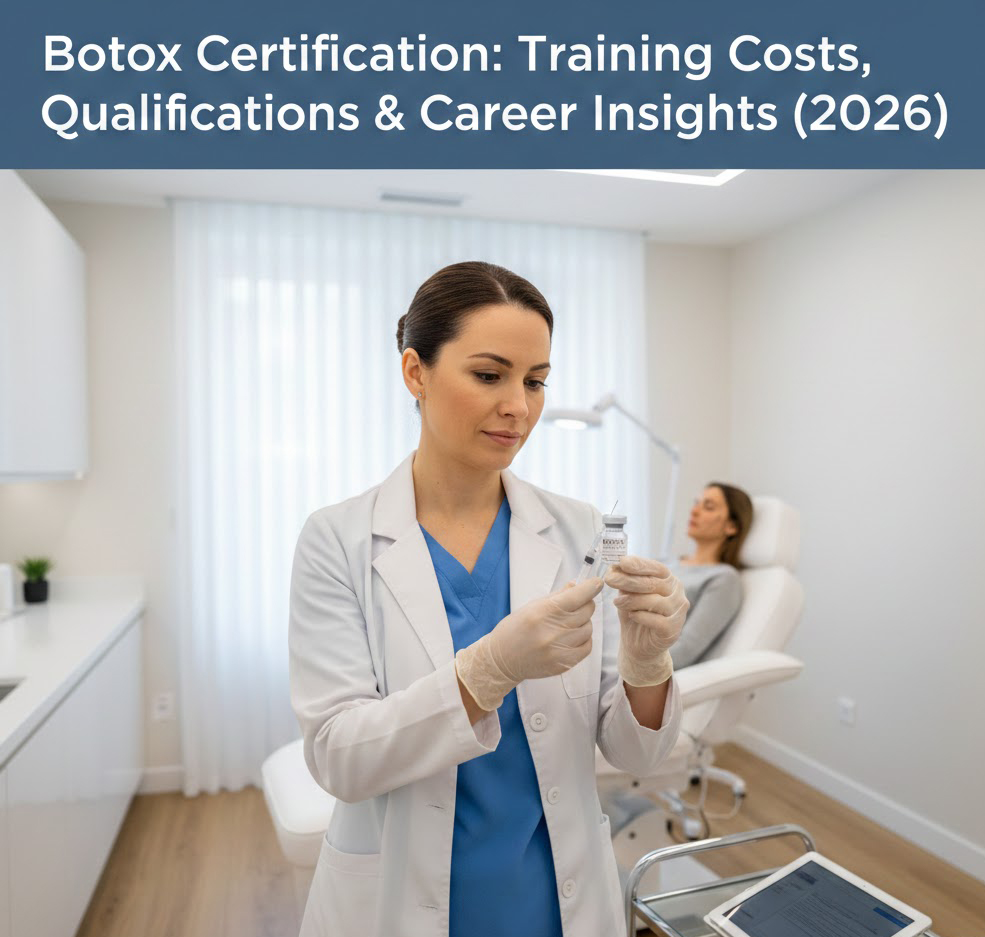
In 2026, demand for non-surgical facial rejuvenation continues to rise steadily. Botulinum toxin injections remain the most requested aesthetic procedure worldwide, and the medical aesthetics industry shows no signs of slowing. What was once limited primarily to dermatology and plastic surgery practices has expanded into medical spas, family medicine offices, and private practice environments across the country.
As more healthcare professionals look to diversify their careers, Botox certification has become a common entry point into aesthetic medicine, often beginning with a structured Botox certification course. This level of structured education is typically introduced in a professional Botox certification training program. However, botulinum toxin training is often misunderstood. It is not simply about learning injection sites. It requires anatomical precision, careful patient assessment, complication management, and a clear understanding of legal scope-of-practice.
As a physician practicing in aesthetic medicine, I have seen the difference that proper training makes. Injectables are predictable and safe when performed correctly. When they are not, complications are almost always the result of inadequate preparation rather than the medication itself.
If you are considering Botox certification in 2026, it’s critical to choose a program that combines clinical safety, structured education, and real-world application.
Our Neurotoxins and Dermal Fillers Certification Course is designed specifically for licensed medical professionals entering aesthetic medicine with a strong clinical foundation.
Before enrolling, review certification, licensing requirements, and salary expectations to understand your career path in aesthetic medicine.
The Growth of Botulinum Toxin in 2026
Botulinum toxin continues to dominate the injectable market. Globally, it accounts for roughly two-thirds of all aesthetic injectable procedures. Dermal fillers follow behind, with other injectable treatments making up the remaining share.
In everyday clinical practice, the most common concerns patients present with include forehead rhytids, glabellar lines, and crow’s feet. These dynamic wrinkles respond well to botulinum toxin injections because they are driven by repetitive muscle contraction.
However, aesthetic consultations have evolved. Patients are increasingly educated and often request comprehensive treatment plans rather than isolated wrinkle reduction. Volume loss in the midface, nasolabial folds, and lip structure frequently becomes part of the discussion. That is why dermal filler injections are commonly paired with Botox treatments.
This clinical reality explains why many Botox training programs now include or strongly recommend a dermal filler training course or formal dermal filler certification. In modern aesthetic medicine practice, neuromodulators and fillers work together.

What Botox Certification Actually Involves
Because botulinum toxin type A is a prescription medication, Botox certification is limited to licensed healthcare professionals. Eligibility typically includes:
Registered nurses
Nurse practitioners
Physician assistants
Physicians
Dental professionals
Family physicians expanding into aesthetic medicine
Estheticians and cosmetology license holders are not legally permitted to perform botulinum toxin injections in any state. This is a medical procedure, and it must remain within medical scope-of-practice boundaries. According to state medical board regulations, these boundaries are strictly enforced to ensure patient safety.
Regulatory requirements vary by state. Some states require direct physician supervision. Others allow nurse practitioners and physician assistants to operate under collaborative agreements. Before enrolling in Botox training courses, providers must confirm prescriptive authority requirements, supervision regulations, and medical spa ownership laws in their state.
Failure to understand the regulatory landscape can create serious legal risk. Certification alone does not override state law.
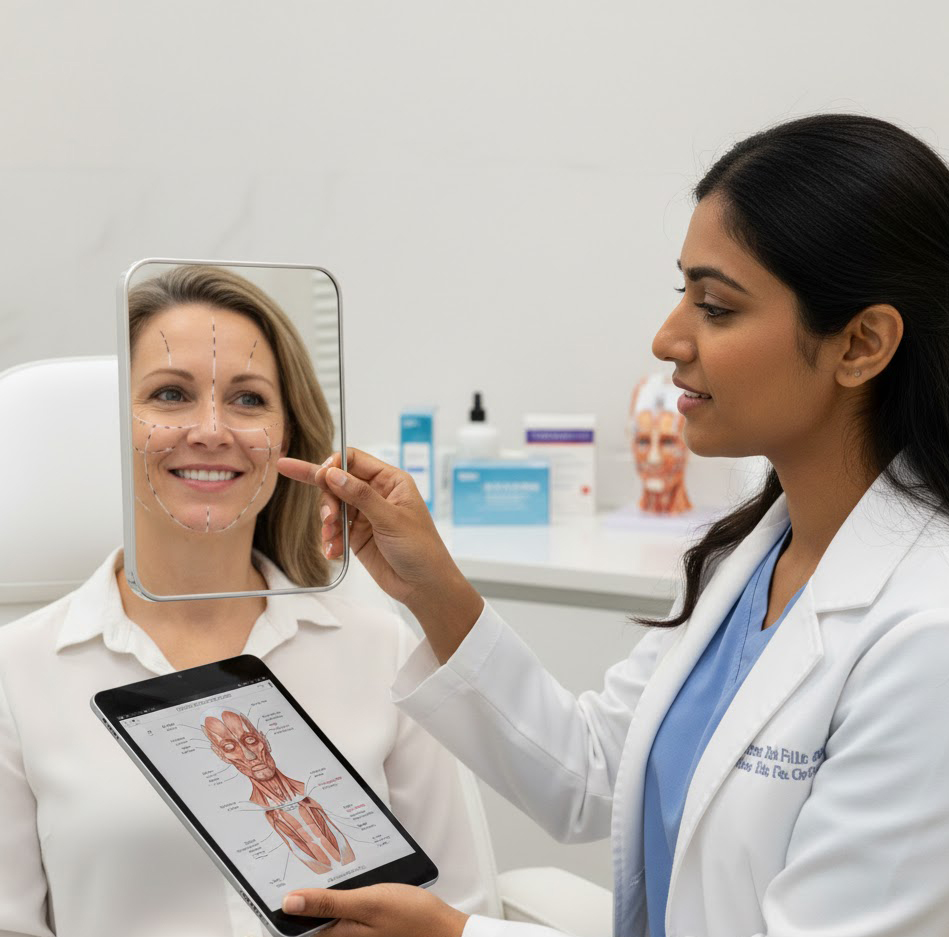
A comprehensive Botox training pathway should combine structured didactic education with supervised hands-on clinical practice before a provider independently treats patients. Online education can provide the foundational theory, while supervised practice develops tactile technique and clinical confidence. The educational component should begin with detailed facial anatomy, often building on the foundational knowledge found in a comprehensive aesthetic medical setting.
This includes understanding the functional relationship between the frontalis, corrugator, procerus, and orbicularis oculi muscles. Injection safety depends on recognizing how these muscles interact dynamically during facial expression.
Botulinum toxin pharmacology must also be covered thoroughly. Providers should understand the mechanism of neuromuscular blockade, reconstitution techniques, dosing strategies, and diffusion characteristics. Differences between botulinum toxin type formulations should be clearly explained, as improper dilution or placement increases complication risk.
Patient assessment is another critical component. A provider must know how to review medical history, screen for neuromuscular disorders, evaluate previous aesthetic procedures, and perform a facial assessment at rest and during animation. In my experience, one of the most common early mistakes is treating static wrinkles without evaluating muscle strength and compensation patterns. Accurate patient assessment guidelines are vital to achieving natural results.
Injection technique training should emphasize:
Depth control
Needle angle
Dose distribution
Symmetry correction
Advanced brow shaping
Micro-dosing strategies
Lower face neuromodulation
Most importantly, complication management must be addressed. Recognizing and managing ptosis, understanding vascular anatomy, documenting properly, and conducting appropriate follow-up are core elements of safe aesthetic practice.

Why Hands On-Training Matters
Botulinum toxin training cannot be mastered through lecture alone. Watching injection videos is not equivalent to performing supervised injections. Muscle resistance, tissue feel, and diffusion behavior are tactile skills. They develop only through repetition under experienced supervision. Programs that provide minimal live patient exposure leave new injectors underprepared.
When evaluating Botox training courses, providers should consider:
Instructor credentials
Student-to-instructor ratio
Live model availability
Direct feedback during practice injections
Quality mentorship often determines long-term confidence.
Botox and Dermal Filler Certification: A Practical Combination
In aesthetic medicine, Botox and dermal fillers are complementary tools. Botulinum toxin injections reduce dynamic wrinkles by relaxing targeted muscles. Injectable dermal fillers restore structural volume in areas such as the cheeks, lips, jawline, and nasolabial folds.
Providers who complete a dermal filler certification course after Botox certification expand their ability to deliver comprehensive aesthetic treatments. Many patients expect combined treatment plans, and practices that offer both modalities tend to see stronger retention. Educational pathways may include dermal filler certification classes, advanced dermal filler training courses, or injectable dermal fillers workshops. Each adds depth to an aesthetic medicine practice.
Botox Certification Cost in 2026
Botox certification cost varies depending on course depth and structure.
-
Introductory botulinum toxin training programs generally range between $1,500 and $2,500
-
Advanced injection techniques programs may cost between $2,500 and $4,000
-
Combined botulinum toxin and dermal filler certification courses often range from $3,500 to $6,000
Programs that offer continuing medical education credit hours may cost more, particularly if they include extended live patient experience. However, cost alone should not determine course selection. Inadequate training may ultimately be far more expensive if complications occur.

Practice Economics and Return on Investment
In most clinical settings, botulinum toxin injections offer predictable margins.
-
Wholesale vial costs typically range from $350 to $700
-
Average retail price is approximately $15 per unit
-
Revenue per vial often exceeds $1,000
-
Typical treatment plans range from 20 to 40 units
-
Average revenue per appointment ranges between $300 and $600
With consistent patient volume in medical spas or private practice environments, providers often recover Botox certification cost within several months. Financial return should never overshadow proper preparation or patient safety.
Building an Aesthetic Medicine Career
After completing Botox certification and dermal filler training, healthcare professionals may work in:
Medical spas
Dermatology clinics
Plastic surgery offices
Private practice settings
Functional medicine clinics
Concierge practices
Over time, many providers expand into laser treatments, radiofrequency procedures, microneedling, and body contouring devices.
Botox certification often serves as the foundation for broader participation in the cosmetic industry. Those who eventually open their own practice must also understand business management, compliance, marketing, and vendor relationships.
Many providers begin with Botox certification training before expanding into dermal filler certification and advanced aesthetic procedures.
Legal and Risk Management Considerations
All botulinum toxin injections must remain within legal scope-of-practice. Providers should maintain active malpractice insurance that specifically covers aesthetic procedures. Proper documentation, secure treatment forms, and regulatory compliance are essential.
Providers must also ensure they are operating under a qualified Laser Safety Officer if they are using combined light-based therapies.
Botulinum toxin type A must only be obtained through authorized pharmaceutical channels. Using unauthorized sources creates legal and safety risks. Professional discipline protects both patient and license.
A Physician’s Perspective: Excellence in Botox and Injectable Practice
Botox certification can be a valuable addition to an aesthetic practice when approached responsibly. Botulinum toxin training requires more than procedural familiarity. It demands anatomical precision, clinical judgment, ongoing education, and unwavering commitment to patient safety.
Healthcare professionals who combine structured Botox training, dermal filler certification, supervised hands-on training, and strict regulatory compliance position themselves for long-term success in aesthetic medicine practice. In 2026, the injectors who stand out are not simply technicians. They are disciplined clinicians who approach aesthetic procedures with the same respect and rigor they apply to any medical intervention.

Frequently Asked Questions
Who qualifies for Botox certification?
Botox certification is limited to licensed medical professionals. Eligible providers typically include physicians, nurse practitioners, physician assistants, registered nurses, and dental professionals. Requirements vary by state and scope-of-practice regulations.
What is the best Botox certification course?
The best Botox certification course should include facial anatomy, injection techniques, patient assessment, and complication management. Many providers choose combined neurotoxin and dermal filler training programs for a more complete foundation. You can explore our online Botox and dermal fillers certification course designed specifically for medical professionals entering aesthetic medicine.
How long does Botox certification take?
Most Botox certification courses range from 8 to 24 hours of structured instruction. Online programs allow flexible learning at your own pace, while clinical confidence develops through continued practice and supervised experience.
Is hands-on training required for Botox certification?
Hands-on training is an important step in becoming a confident injector. However, most medical professionals begin with a structured online Botox certification course to build a strong foundation in facial anatomy, injection techniques, safety, and complication management.
A high-quality online program prepares you to understand treatment planning and clinical decision-making before advancing into supervised hands-on experience in a medical setting.
What topics are covered in Botox training programs?
Comprehensive programs cover facial anatomy, botulinum toxin pharmacology, injection techniques, patient assessment, safety protocols, and post-treatment care. Advanced courses may also include dermal filler training and complication management.
How much does Botox certification cost in 2026?
Botox certification cost generally ranges from approximately $1,500 to $6,000 depending on course depth and hands-on training. Online certification programs provide a more accessible way to build foundational knowledge before progressing into clinical training environments.
Is dermal filler certification necessary?
Dermal filler certification is not always legally required, but it is strongly recommended. Neuromodulators and fillers are often used together, and providers trained in both are able to deliver more comprehensive treatment plans.
Do Botox certification courses include Continuing Medical Education (CME)?
Some programs offer CME credits, while others focus on procedural and clinical training. Providers should confirm CME availability and ensure compliance with licensing requirements.
Can nurses perform Botox injections independently?
Registered nurses may perform botulinum toxin injections depending on state regulations and required supervision agreements. Certification does not override state medical board rules, and providers must follow local guidelines.
How long is a Botox certification valid?
Certification validity depends on the training provider and state requirements. Ongoing education is recommended to maintain competency and stay current with evolving safety standards in aesthetic medicine.
Is Botox certification worth it?
For licensed medical professionals, Botox certification can expand service offerings, increase earning potential, and strengthen credibility in aesthetic medicine. When combined with proper training and continued education, it is one of the most effective entry points into the cosmetic industry.
Can Botox certification be completed online?
The didactic portion of Botox certification training can be completed online and can cover facial anatomy, patient assessment, pharmacology, safety, treatment planning, and complication management. Before independently treating patients, providers should also obtain supervised hands-on clinical experience and confirm all state licensing and supervision requirements.
Does a Botox certificate legally allow me to inject?
No. A certificate documents completed education, but it does not replace a professional license or expand scope of practice. Legal authority depends on your active medical or nursing license, state law, prescriptive authority, delegation rules, and any required physician supervision.