
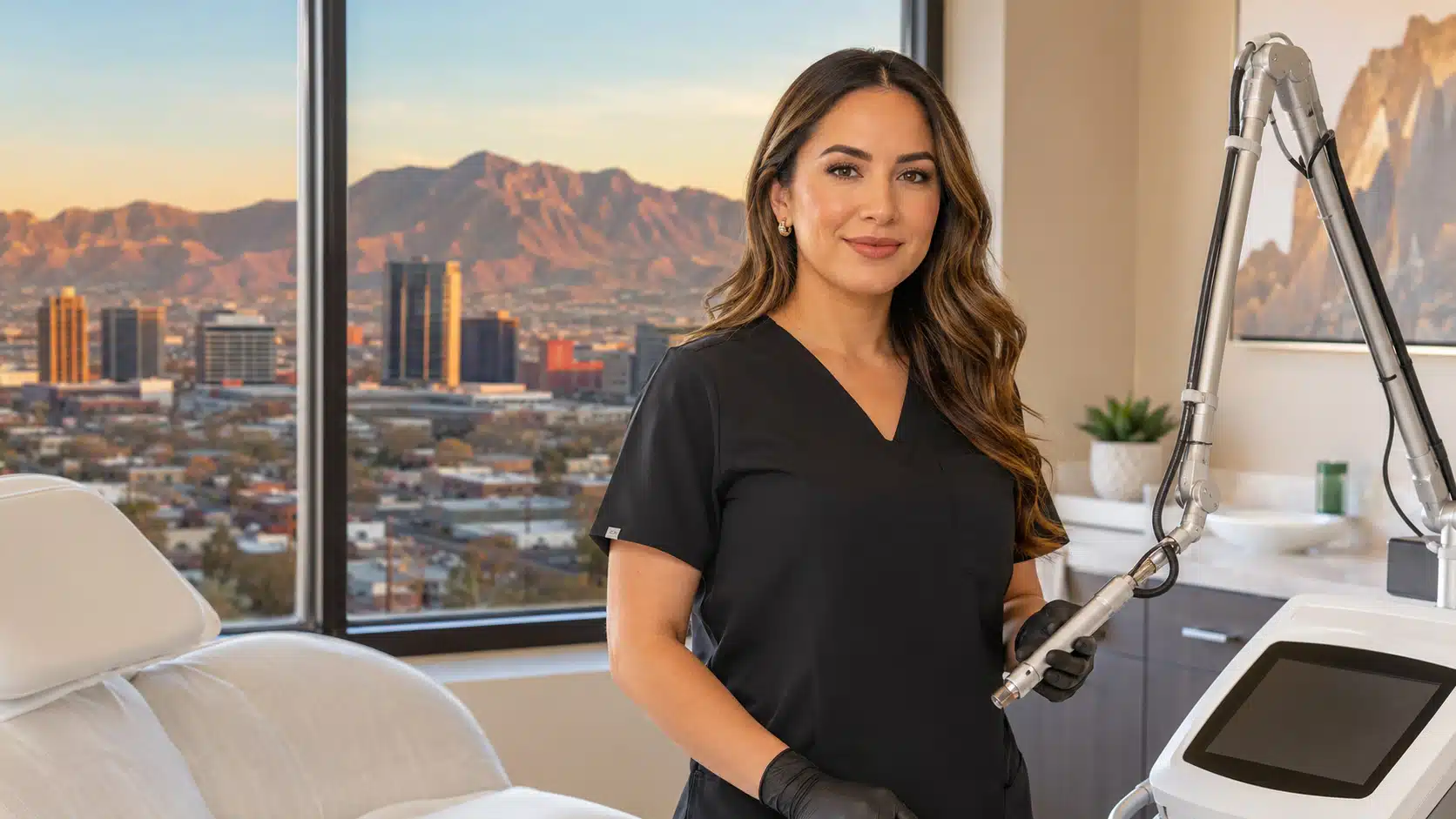
El Paso Cosmetic Laser Training Courses
El Paso is one of Texas’s most exciting markets for medical aesthetics, laser hair removal, skin rejuvenation, med spa services, physician-led clinics, and advanced beauty treatments. As more clients look for modern cosmetic procedures, trained professionals have a real opportunity to grow their skills and step into higher-value aesthetic services.
Online Cosmetic Laser Training for El Paso Professionals
AML Laser Academy provides flexible online cosmetic laser training for El Paso students, beauty professionals, nurses, medical providers, med spa owners, and clinic teams who want to better understand laser physics, laser safety, skin assessment, treatment planning, client screening, and energy-based aesthetic procedures.
AML’s online cosmetic laser courses are available to students in El Paso, Horizon City, Socorro, Canutillo, Fort Bliss, Ysleta, Sunland Park, Las Cruces, and surrounding communities who want flexible access to professional laser education without traveling to a physical AML campus.
Cosmetic laser education is more than pushing buttons on a device — it is about understanding skin, safety, client selection, treatment planning, and how laser energy can be used responsibly in modern aesthetics.
Comprehensive training programs cover critical theoretical concepts, including:
- Laser and light-based technology fundamentals
- Selective photothermolysis
- Fitzpatrick skin typing
- Skin and hair anatomy
- Client consultation and screening
- Contraindication screening
- Treatment planning
- Protective eyewear and room safety
- Possible adverse reactions and incident management
- Infection-control principles
- Treatment documentation
- Professional responsibilities

These self-paced courses are designed for students balancing education with existing employment, family, beauty work, healthcare careers, or clinic responsibilities. AML Laser Academy provides online education and certificates of completion. It does not operate a physical laser school in El Paso. Any separate licensing, physician delegation, hands-on practice, supervised procedure, or facility requirements must be completed according to the rules that apply to the student’s intended role and location.
Cosmetic Laser Courses for El Paso Aesthetics Professionals
Students can choose individual specialty topics or complete a broader program introducing multiple cosmetic laser and energy-based technologies.
Advanced Laser Aesthetics Certification
An Advanced Laser Aesthetics Certification program provides a broad educational foundation. It introduces subjects such as general laser safety, hair-reduction theory, Intense Pulsed Light (IPL), radiofrequency treatments, tattoo-removal fundamentals, skin-rejuvenation procedures, treatment planning, and professional documentation.
This path is well-suited to learners who want exposure to several areas of laser aesthetics rather than focusing on only one procedure.
This is a strong option for professionals who want a broader introduction to the types of services commonly offered in med spas, laser clinics, dermatology offices, wellness practices, and physician-led aesthetic settings.
IPL and Laser Hair Removal Theory
Our IPL Laser Hair Removal Technician Certification training and laser hair removal courses focus heavily on the theoretical principles behind light-based hair reduction.
Students study hair-growth cycles, melanin absorption, skin typing, client selection, contraindications, treatment parameters, safety procedures, post-treatment considerations, and potential complications.
Important: AML’s online laser hair removal education can help students understand the science, safety, and treatment theory behind light-based hair reduction. It is separate from the Texas-approved 40-hour training required for applicants entering the standard TDLR Apprentice-in-Training pathway.
Laser Tattoo Removal
The Laser Tattoo Removal Technician Certification program introduces how laser energy interacts with tattoo pigment.
Key topics include tattoo and pigment assessment, wavelength selection, treatment expectations, safety precautions, adverse reactions, and aftercare considerations.
The legal requirements for performing tattoo-removal procedures differ from those governing laser hair removal. El Paso students should verify the rules that apply to their professional license, workplace, supervising physician, and intended procedure before offering services.
Laser Safety Officer (LSO) Training
Laser safety is essential in any facility using Class 3B or Class 4 laser equipment. AML’s Laser Safety Officer Certification training covers controlled treatment areas, protective eyewear, warning signs, standard operating procedures, laser hazards, incident documentation, emergency planning, and safety-program oversight.
Completing LSO education does not independently authorize someone to perform regulated laser procedures, but it strengthens a professional’s knowledge of workplace safety and risk management.
This course can be especially helpful for med spa owners, physicians, nurses, clinic managers, laser staff, and medical aesthetics teams who want to create a safer, more organized laser environment.
Radiofrequency and Skin Rejuvenation
Professionals can study RF, IPL photofacial concepts, skin-rejuvenation procedures, client consultation, contraindication screening, and treatment planning by enrolling in the RF Skin & Body Tightening Certification.
The legal classification of these procedures depends heavily on the type of device, the treatment performed, the professional’s credentials, and the clinical environment.
Texas Laser Hair Removal Certification Requirements
Texas has its own laser hair removal pathway, and El Paso students should understand how state rules may apply before choosing training, employment, or med spa services. For a deeper breakdown, review AML’s Texas laser license requirements guide. The standard Texas pathway includes four individual certification levels:
An applicant must complete an agency-accepted 40-hour laser hair removal training program, submit an application, pay the required fee, and successfully complete a criminal-history background check. An Apprentice-in-Training certificate is valid for two years.
A licensed Apprentice-in-Training must perform 100 laser hair removal procedures within 12 months under the direct supervision of a Senior Laser Hair Removal Technician or Laser Hair Removal Professional. These procedures must be fully documented and submitted with the TDLR application.
A licensed Laser Hair Removal Technician must directly supervise at least 100 procedures within 12 months. Those procedures must be audited by a Laser Hair Removal Professional and documented for submission.
An applicant must hold a current Senior Laser Hair Removal Technician certificate, obtain certification through a TDLR-approved certifying entity, and pass the applicable department-approved examination.
Official state forms and applications are available through the Texas Department of Licensing and Regulation Laser Hair Removal Program and its official forms and applications resources.
Recent Texas Regulatory Updates
Texas updated Chapter 118 rules effective July 1, 2026. The update did not remove the main pathway involving approved education, individual certification, supervised procedures, and applicable facility requirements.
El Paso students should always verify current requirements directly with TDLR before making licensing or employment decisions.
How Online Laser Training Fits the Texas Career Pathway
Online laser education is a powerful first step for El Paso professionals who want to understand the science, safety, and treatment concepts behind cosmetic laser procedures.
For Texas laser hair removal licensing, students may still need separate TDLR-approved training, supervised procedures, physician delegation, or facility-based requirements depending on their pathway.
Students pursuing the Texas Apprentice-in-Training pathway should confirm their required 40-hour provider directly through TDLR or the official Texas approved-provider search.
Can Texas Estheticians Perform Laser Hair Removal?
Holding an esthetician or cosmetology license does not automatically authorize someone to perform laser hair removal in Texas. The TDLR states that a person performing laser hair removal generally must hold the appropriate specialty laser certificate unless they qualify for a recognized exemption.
Exemptions generally include:
- A Texas-licensed physician
- An employee or other person performing tasks delegated by a Texas-licensed physician
- A licensed health professional performing laser hair removal within the scope permitted by their specific licensing board
Because scope-of-practice rules differ significantly among estheticians, cosmetologists, nurses, physician assistants, nurse practitioners, and physicians, each student should verify the requirements that apply to their exact professional license.
Physician Delegation and Medical Settings
Some laser procedures may be performed within a physician practice or under lawful physician delegation. Working under physician delegation may qualify an employee for an exemption from the individual TDLR laser hair removal certificate.
However, that exemption depends entirely on the actual delegation arrangement and does not create independent authorization for every procedure or every workplace.
A professional should never assume that employment in a medical spa automatically authorizes them to perform every laser or energy-based procedure.
The individual must always evaluate the exact treatment, the type of device, their professional license, their employer, the physician delegation protocols, and applicable state regulations.

Texas Laser Hair Removal Facility Requirements
Texas regulates laser hair removal facilities separately from individual personnel. A registered facility generally must employ at least one registered Laser Hair Removal Professional and maintain a written agreement with a consulting physician.
The agreement must address:
- Facility protocols and safety guidelines
- Regular physician audits
- Emergency consultation availability
- Availability for an emergency appointment when necessary
- A designated alternate consulting physician
- Operational and recordkeeping responsibilities
The primary practice locations of both the consulting physician and alternate consulting physician must be within 75 miles of the laser hair removal facility.
A registered facility does not necessarily need an on-site medical director as long as it maintains this required consulting-physician agreement and complies with operational, recordkeeping, and safety audits.
This is important for med spa owners and clinic teams because it shows why understanding facility rules, physician agreements, documentation, and safety procedures matters before offering laser hair removal services in Texas.
Building Skills for the El Paso Aesthetics Market
Aesthetic professionals in the El Paso area work in a wide range of environments, including medical spas, dermatology practices, plastic surgery offices, wellness practices, and specialized laser hair removal facilities.
For many professionals, cosmetic laser education is not just about earning a certificate — it is about opening the door to higher-value services, stronger career options, and more confidence inside the aesthetics industry.
Due to El Paso’s unique location as a major border city, practices also serve a diverse, international clientele from nearby New Mexico and Mexico, meaning that bilingual communication and a deep understanding of diverse skin types, particularly Fitzpatrick Types IV through VI, are highly valuable skills.
This makes El Paso a unique aesthetics market where professionals who understand skin diversity, consultation, safety, and advanced treatment theory can stand out.
Why Laser Safety Education Matters
Training should be chosen carefully based on your intended career path, professional role, and regulatory framework.
Quality laser safety and theory education prepare you to think critically beyond basic device operation:
- Understanding how wavelength affects different skin tones
- Identifying how fluence and pulse duration influence tissue response
- Knowing exactly when a procedure must be postponed
- Recognizing how contraindications affect client safety
- Documenting treatment settings and handling adverse reactions professionally
Laser safety education is relevant to technicians, medical professionals, clinic managers, practice owners, and staff responsible for safety-program oversight.
Begin Your Cosmetic Laser Education
If you are ready to grow beyond traditional beauty services and step into the world of cosmetic lasers, AML Laser Academy gives you a flexible way to begin.
Whether your goal is to work in a med spa, support a physician-led clinic, expand your professional knowledge, or understand laser safety more deeply, this El Paso online training page is a strong starting point.
Explore the Advanced Laser Aesthetics Certification, IPL Laser Hair Removal Technician Certification, Laser Tattoo Removal Technician Certification, and Laser Safety Officer Certification to identify the educational path that best supports your goals. Students can also explore AML’s online laser school locations for additional city-specific education and regulatory guidance.
Review Texas laser hair removal certification levels, supervised procedure requirements, facility rules, and professional scope considerations.
AML Location Hub Online Laser School LocationsBrowse AML’s city-specific online cosmetic laser training pages and regional education resources.
Frequently Asked Questions
Are AML Laser Academy courses offered at a physical El Paso campus?
No. AML Laser Academy provides online cosmetic laser education and does not operate a physical training campus in El Paso. Students complete AML coursework remotely and can study around work, clinic, school, or family schedules.
Can I complete AML Laser Academy courses online from El Paso?
Yes. AML Laser Academy courses are completed online and are designed for flexible study. Depending on your Texas career path, separate hands-on training, supervised procedures, physician delegation, facility requirements, or licensing steps may still apply.
Does an AML certificate make me a licensed Texas laser technician?
No. An AML certificate documents completion of an AML educational course. It is not a Texas license or TDLR individual laser hair removal certificate.
What is required to enter the Texas laser hair removal pathway?
The standard Apprentice-in-Training pathway requires completing an agency-accepted 40-hour program, submitting a state application with fees, and successfully passing a criminal-history background check.
Is supervised experience required in Texas?
Yes. To advance from an Apprentice-in-Training to a Laser Hair Removal Technician, you must complete 100 directly supervised procedures within 12 months and submit documented proof to the TDLR.
Can a Texas esthetician perform laser hair removal?
An esthetician license alone does not authorize laser hair removal. Estheticians must either obtain the appropriate TDLR laser certificate, operate under lawful physician delegation, or qualify under another recognized legal exemption.
Does an El Paso laser hair removal facility need a physician on-site?
No. The TDLR does not require an on-site medical director, but the facility must maintain a formal written agreement with a consulting physician whose primary practice is located within 75 miles of the laser hair removal facility.
Are Texas requirements identical for every cosmetic laser procedure?
No. The rules for laser hair removal do not necessarily govern every other cosmetic laser, light-based, or aesthetic procedure.
Is this training helpful for doctors, nurses, and med spa owners?
Yes. AML Laser Academy courses can be helpful for physicians, nurses, med spa owners, clinic managers, and aesthetic teams who want to better understand laser safety, treatment theory, documentation, client screening, and the professional responsibilities involved in cosmetic laser services.
Can nearby New Mexico students take these online courses?
Yes. Students in southern New Mexico, Las Cruces, and surrounding areas can access online educational materials. However, anyone planning to practice in New Mexico must verify the licensing rules of that specific state.