
Common Treatment Areas
- Laser hair reduction
- IPL photofacials and photorejuvenation
- Laser tattoo removal
- Radiofrequency skin and body treatments
- Skin rejuvenation and resurfacing concepts
Learn the education, safety training, state requirements, hands-on competency, certification pathways, salary potential, and career steps involved in entering medical aesthetics.
Becoming a cosmetic laser technician in 2026 can provide a direct path into the growing field of medical aesthetics. The right pathway depends on your state, current professional license, employer requirements, treatment type, and whether separate hands-on or supervised clinical experience is required.
This guide explains the major steps, expected training timeline, certification options, salary potential, and safety responsibilities involved in building a professional cosmetic laser career.
Study laser physics, IPL, radiofrequency, skin science, contraindications, treatment planning, and professional safety responsibilities.
Understand controlled areas, protective eyewear, Class 3B and Class 4 hazards, plume, fire safety, documentation, and emergency procedures.
Confirm whether your state requires prior licensure, physician supervision, a state-approved program, specific treatment hours, or facility registration.
Complete practical training with the specific devices, settings, protocols, and treatment procedures used in your workplace.
Apply to medical spas, dermatology offices, plastic surgery practices, or other lawful aesthetic settings that match your credentials and scope.
Cosmetic laser education can offer a relatively fast entry into medical aesthetics compared with many traditional healthcare pathways. Actual results depend on local laws, prior licensing, practical training requirements, employer demand, and individual performance.
| Category | Estimated Value |
|---|---|
| Training Cost | $399–$1,500 |
| Starting Salary | Approximately $55,000 |
| Year 2 Potential | $70,000+ |
| Year 3+ Potential | $90,000+ |
| Possible ROI Timeline | 1–3 months after qualifying employment |

A cosmetic laser technician is trained to support or perform authorized light-based and energy-based aesthetic treatments within the limits of state law, professional licensing, supervision, and workplace policy.
Requirements vary significantly by state. Some states provide a direct training pathway, while others restrict cosmetic laser procedures to licensed healthcare professionals or require physician supervision, electrology credentials, esthetics licensure, or state-approved training.
Cosmetic laser and IPL procedures are medical treatments. Treatment authority depends on professional healthcare licensing, scope, and supervision.
Texas uses a structured pathway involving training, apprentice status, supervised treatments, and progression through technician levels.
Laser hair removal is generally connected to electrology and medical-practice rules, with specific training, supervision, and facility requirements.
Laser hair removal does not use one statewide operator license, but other energy-based procedures may fall within medical practice restrictions.
Compare current requirements in the Laser License Requirements by State guide.
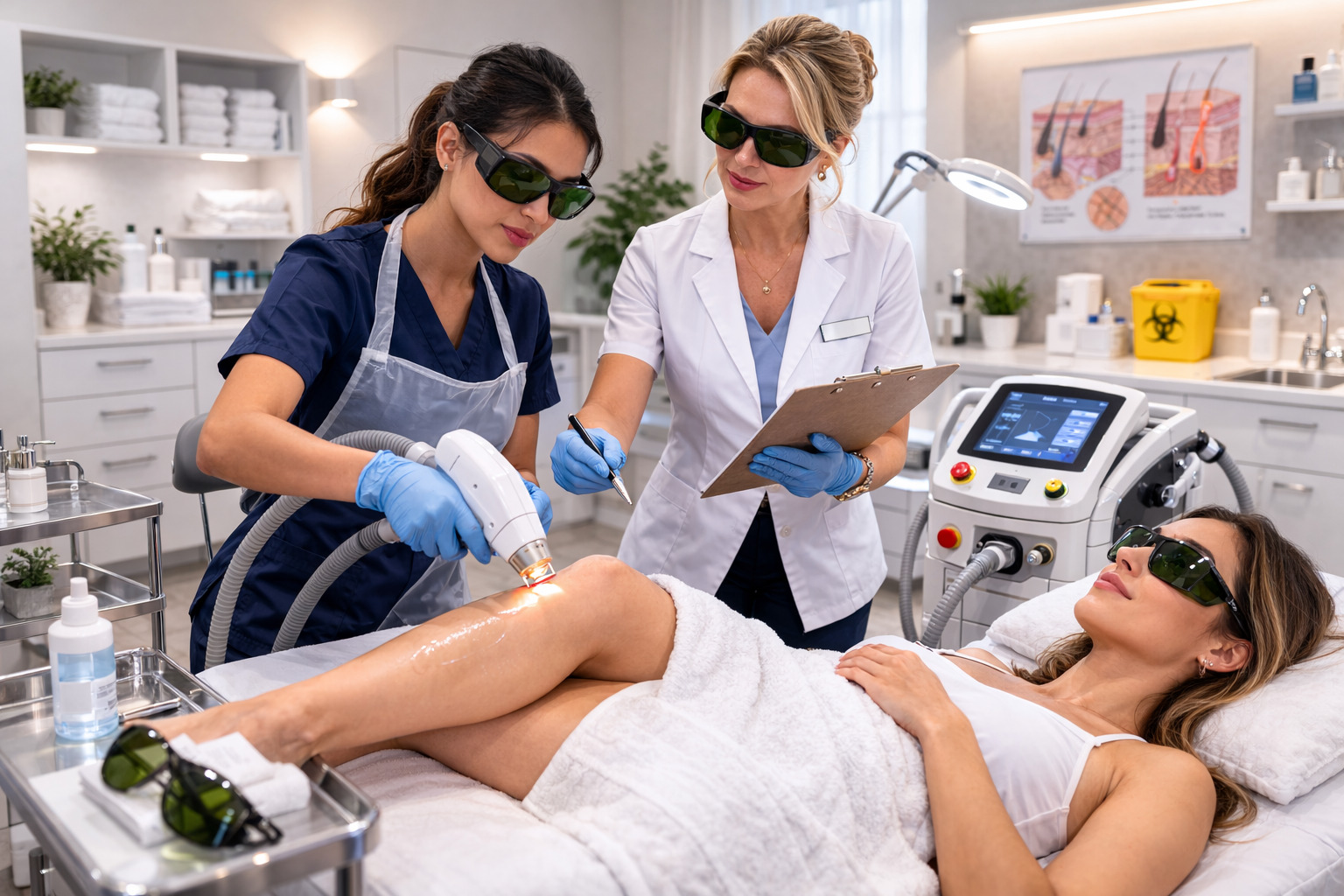
Study laser safety, IPL, hair reduction, tattoo removal, radiofrequency, treatment planning, and professional responsibilities through flexible self-paced coursework.
AML’s curriculum is developed for professional learners and supported by medical-aesthetics and laser-safety expertise.
Complete theory and safety education around your schedule from any compatible device.
Eligible course certificates document completed education and may be verified through AML’s online certificate portal.
Build the essential knowledge base.
Develop supervised device-specific skills.
Prepare for employment and ongoing growth.
| Requirement | General Standard | Possible Verification |
|---|---|---|
| Age | 18 years or older | Government-issued ID |
| Education | High school diploma or equivalent | Diploma or transcript |
| Physical Ability | Visual acuity and ability to operate equipment safely | Employer or medical clearance |
| Prior Licensure | Varies by state and procedure | State board verification |
| Hands-On Training | May be required by state, employer, or device manufacturer | Clinical competency record |
| Program | Primary Focus | Current Price |
|---|---|---|
| Laser Safety Officer | Laser safety, oversight, hazard controls, and documentation | $299 |
| IPL Laser Hair Removal | Hair-growth cycles, IPL principles, treatment planning, and safety | $399 |
| Laser Tattoo Removal | Ink response, wavelength principles, healing, and risk awareness | $399 |
| RF Skin and Body | Radiofrequency principles, consultation, and treatment concepts | $399 |
| Advanced Laser Aesthetics | Comprehensive multi-course professional education | $799 |
Explore AML Laser Academy’s online training options, compare course pathways, and review current tuition.
These answers provide general career guidance. Requirements vary by state, professional license, employer, procedure, and facility.
Many learners complete theory and safety education within several weeks. A complete pathway may take 60–90 days or longer when supervised hands-on competency, licensing, or state-required treatment hours are involved.
Not in every state. Some states allow a direct training pathway, while others restrict laser treatments to licensed healthcare professionals or require prior esthetics or electrology credentials.
That depends on the state and procedure. Always verify current requirements before enrolling or accepting employment.
Laser theory, safety, skin science, and treatment principles can be completed online. Separate device-specific hands-on training may still be required.
Many earn approximately $55,000 to $90,000+ annually, with higher earnings possible in advanced, high-volume, or commission-based roles.
Programs may cover laser hair reduction, IPL photofacials, tattoo removal, radiofrequency, skin rejuvenation, treatment planning, and laser safety.
It may support faster entry into medical aesthetics and strong career growth, but outcomes depend on local laws, practical competency, employer demand, and professional credentials.
Often no. Laser services may require a lawful medical or commercial facility, insurance, oversight, safety controls, and local regulatory compliance.
A laser technician performs authorized treatments. A Laser Safety Officer supports the facility’s laser safety program, hazard controls, staff education, and documentation.
Requirements vary, but ongoing education helps professionals stay current with technology, safety standards, treatment protocols, and regulatory changes.
Continue with these related AML Laser Academy resources covering salary, state requirements, and professional certification.
Explore current salary ranges, hourly pay, workplace settings, and ways to increase earning potential.
View the Salary Guide → State RegulationsCompare licensing, supervision, training, and scope-of-practice rules across the United States.
Check State Requirements → Professional TrainingLearn how AML certification supports professional education, documentation, and career development.
Explore Certification →This guide provides general educational information and does not constitute legal, licensing, employment, or medical advice. Cosmetic laser laws and requirements vary by state and may change.
Before performing any treatment, verify current licensing, scope-of-practice, physician-supervision, facility, insurance, and hands-on competency requirements with the appropriate state agencies, employer, malpractice carrier, and qualified legal counsel.