
Laser Safety Officer (LSO) Requirements 2026: Medspa Compliance, ANSI Standards & Risk Control
A practical 2026 guide to Laser Safety Officer responsibilities, ANSI Z136.3 standards, OSHA expectations, facility oversight, documentation, and risk control in medical laser environments.
What Is a Laser Safety Officer in 2026?
A Laser Safety Officer (LSO) is the designated individual responsible for implementing, monitoring, and enforcing a facility’s laser safety program in accordance with ANSI Z136.3 standards. In medical environments operating Class 3B and Class IV laser systems, the LSO oversees hazard evaluation, staff training verification, protective equipment standards, and incident response protocols.
If your medspa operates Class IV lasers or high power laser systems, laser safety is not a policy — it is risk containment.
I’ve been asked to review multiple injury cases over the past few years. The pattern is consistent. The device works exactly as designed. The failure occurs in oversight. Laser safety is often treated as paperwork. In reality, it is clinical protection.
Before operating laser systems, it’s important to understand certification, licensing requirements, and salary expectations in medical aesthetics.
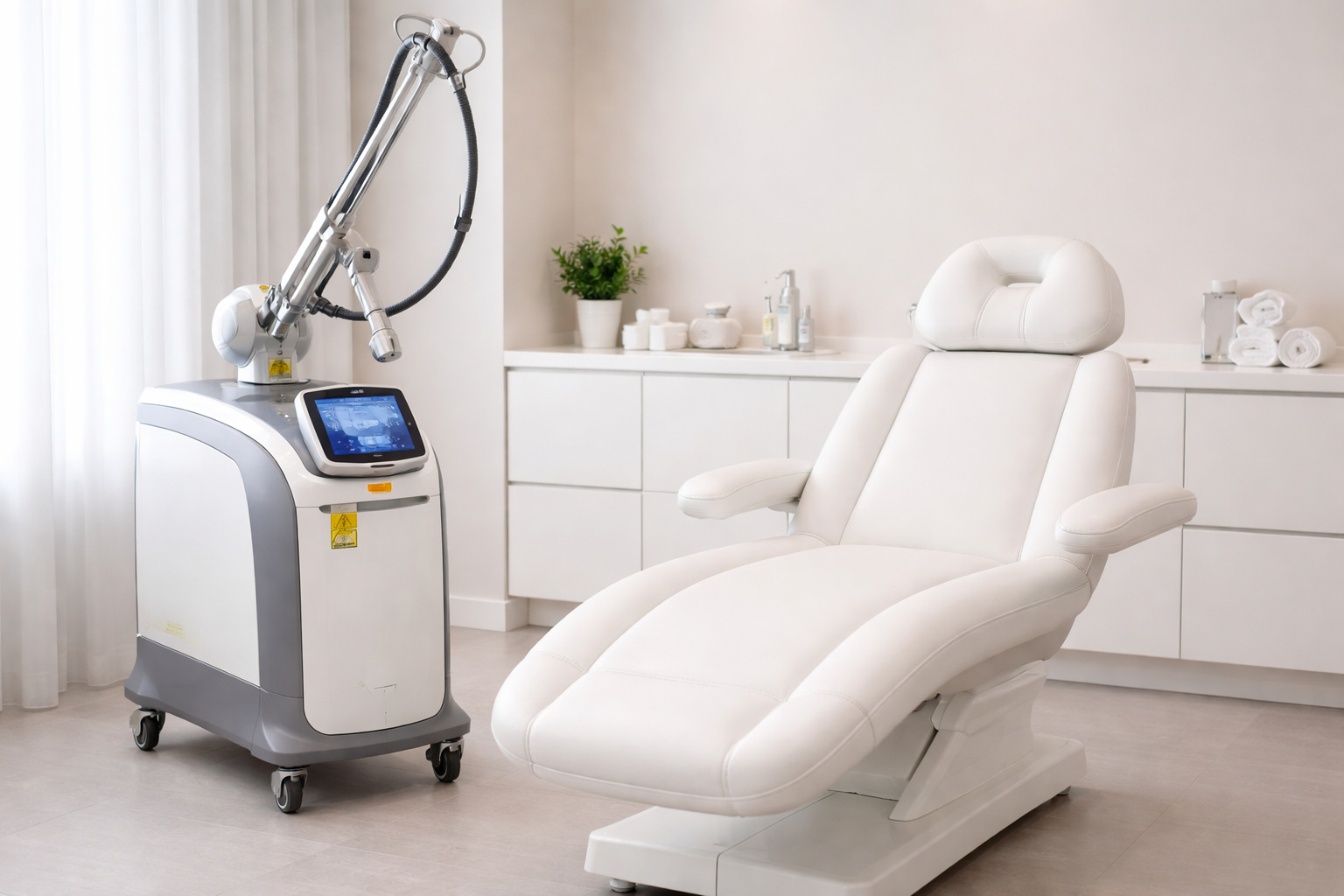
What Actually Happens When Laser Safety Fails
Laser light is not like visible light. It is coherent, concentrated, and capable of causing permanent damage in milliseconds.
I have personally reviewed a case involving a reflected 1064 nm beam from a polished instrument surface. The operator removed protective eyewear briefly between passes. The result was a retinal injury that required urgent ophthalmologic evaluation. That was not a catastrophic room failure. It was a momentary lapse.
In another case, improper parameter selection during resurfacing led to thermal stacking. The patient developed focal scarring. The clinic had “laser safety training” on file. What they lacked was active supervision and real hazard evaluation.
These are not theoretical laser hazards. They are predictable outcomes when laser safety standards are treated as checklists rather than operational discipline.
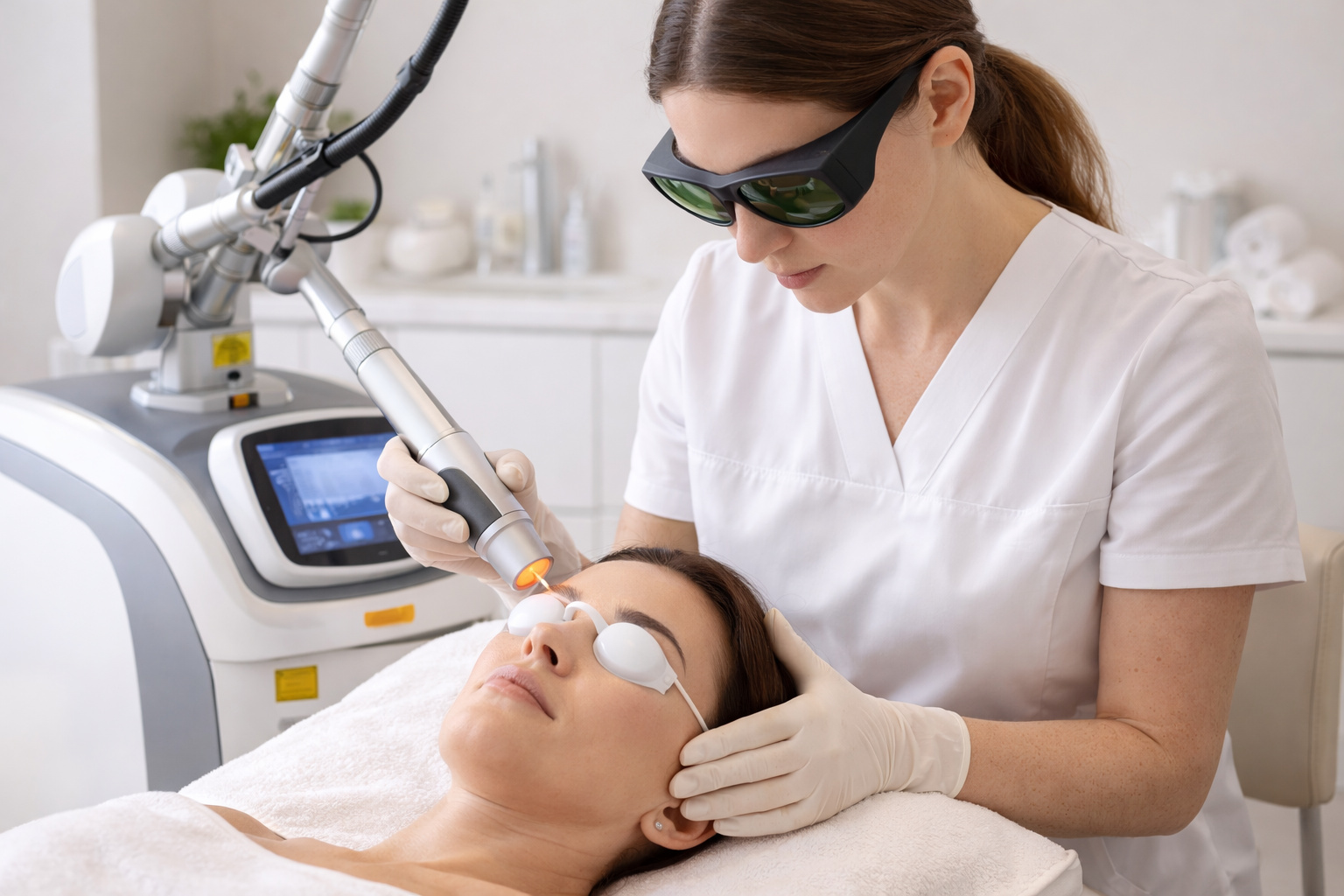
The Real Role of the Laser Safety Officer
A Laser Safety Officer is not a ceremonial title. In a functioning practice, the safety officer LSO must:
- Review every laser system in operation
- Confirm laser operator competency
- Conduct hazard evaluation before room configuration changes
- Enforce personal protective equipment compliance
- Investigate accidental exposure events
Laser safety officer LSO training should prepare someone to calculate nominal hazard zones and nominal ocular hazard distance, yes — but more importantly, it should prepare them to intervene.
In my own practice, the Laser Safety Officer has veto authority. If laser equipment is malfunctioning or documentation is incomplete, procedures are rescheduled. Revenue does not override safety.
Non-Delegable Duties of a Laser Safety Officer
In a properly structured medical laser practice, certain responsibilities cannot be delegated away from the Laser Safety Officer (LSO). While tasks may be distributed operationally, accountability remains centralized.
A functioning Laser Safety Officer must assume responsibility for:
• Conducting and documenting hazard evaluations for each laser system
• Defining the Nominal Hazard Zone (NHZ) for treatment rooms
• Verifying wavelength-specific protective eyewear compliance
• Reviewing and approving laser operator training credentials
• Enforcing written safety protocols and standard operating procedures
• Investigating accidental exposure events and implementing corrective action
• Reviewing equipment maintenance logs and safety feature functionality
• Exercising authority to suspend laser procedures when safety standards are not met
The authority to halt treatment is not symbolic. It is operational.
If documentation is incomplete, eyewear is inappropriate, parameters are unsafe, or equipment performance is questionable, the Laser Safety Officer must intervene — regardless of scheduling pressure or revenue impact.
Delegation does not eliminate liability.
Even when operators perform treatments, oversight responsibility remains attached to the safety program and its designated officer.
A Laser Safety Officer is not an advisory position. It is a control position.
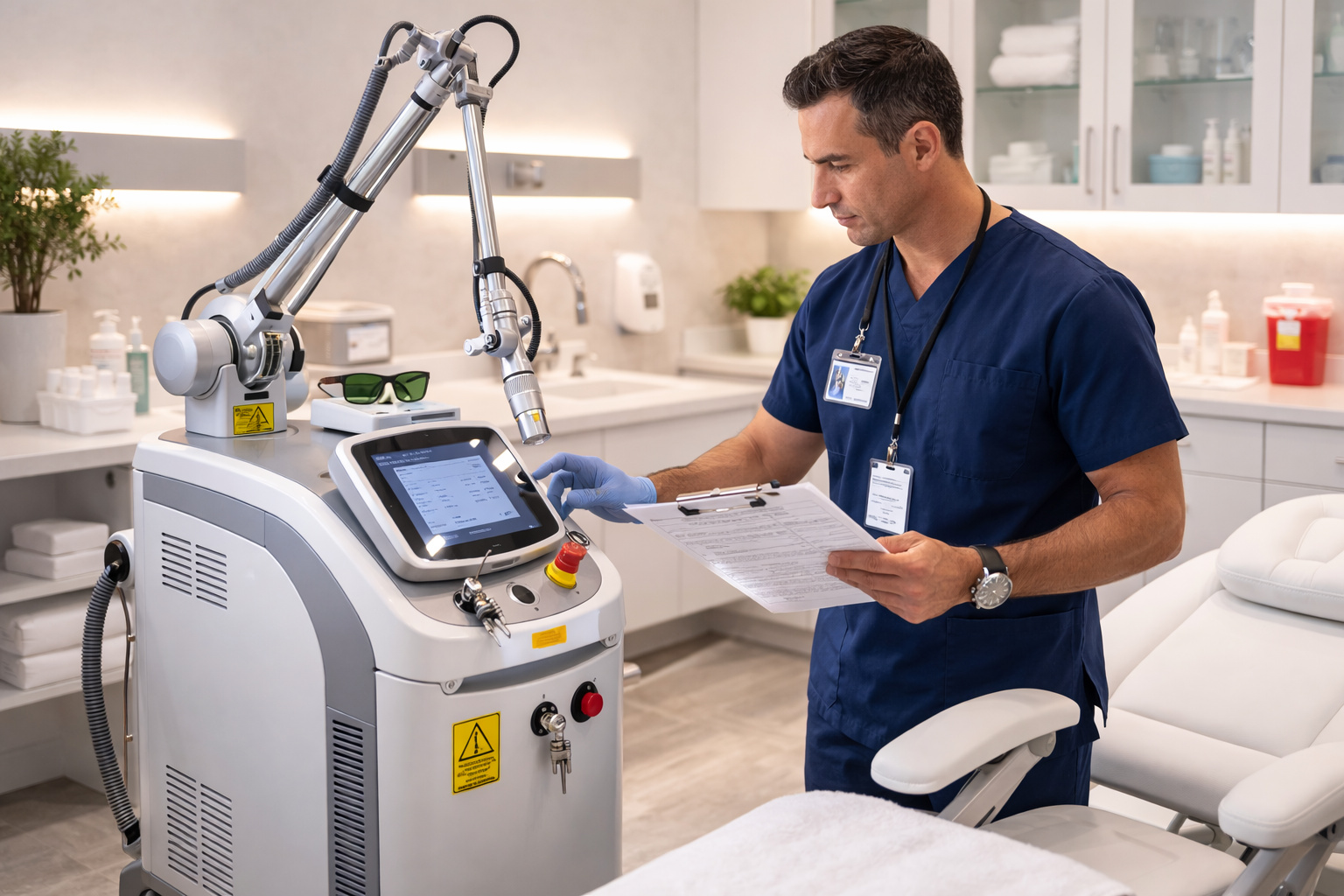
ANSI Standards Matter — But Judgment Matters More
ANSI standards such as ANSI Z136.3 define laser classes, Maximum Permissible Exposure limits, and control measures. These are foundational laser safety standards.
But compliance is not achieved by quoting ANSI.
For example, while ANSI standards specify eyewear requirements for Class IV systems, I require protective eyewear during any high-fluence intense pulsed light treatment as well. I have seen superficial burns from scattered light when operators assumed IPL was “considered safe” compared to medical laser platforms.
Laser safety training should teach basic concepts of beam hazards and non beam hazards. It should also teach what those injuries look like in real patients: blistering, hypopigmentation, delayed hyperpigmentation, retinal photothermal injury.
A safety officer who understands the damage mechanisms will approach laser use differently than one who only completed an online course.
ANSI Z136.3 Explained for Medical Laser Practices
The ANSI Z136 series establishes nationally recognized laser safety standards. In medical and aesthetic environments, the applicable standard is ANSI Z136.3 — Safe Use of Lasers in Health Care Facilities.
While many clinics reference ANSI casually, few fully understand what the standard actually requires.
What Is ANSI Z136.3?
ANSI Z136.3 provides the safety framework for:
- Classification of medical laser systems
- Determination of Maximum Permissible Exposure (MPE)
- Calculation of Nominal Hazard Zones (NHZ)
- Required control measures for Class 3B and Class IV devices
- Protective eyewear specifications
- Administrative and engineering safeguards
It is the nationally recognized technical standard for laser use in healthcare environments.
ANSI Z136.1 vs ANSI Z136.3
Many providers confuse ANSI Z136.1 and ANSI Z136.3.
The distinction matters.
- ANSI Z136.1 is the general laser safety standard across industrial and research environments.
- ANSI Z136.3 is specifically tailored to healthcare settings, including medical spas, dermatology clinics, and surgical centers.
Medical laser practices should reference Z136.3 as their governing framework.
Maximum Permissible Exposure (MPE)
MPE defines the highest level of laser radiation to which a person may be exposed without expected biological damage.
For example:
A 1064 nm Class IV system can exceed retinal MPE levels in milliseconds if protective controls are absent.
Understanding MPE is not theoretical. It determines:
- Required eyewear optical density (OD)
- Safe operating distance
- Acceptable beam exposure duration
An LSO must be able to interpret and apply these exposure limits in real practice settings.
Nominal Hazard Zone (NHZ)
The Nominal Hazard Zone is the space within which laser radiation exceeds MPE levels.
In a medical laser room, NHZ can extend beyond the immediate treatment area depending on:
- Beam divergence
- Reflective surfaces
- Device power output
- Treatment geometry
Proper hazard evaluation includes defining the NHZ before room configuration changes or equipment relocation.
Control Measures Hierarchy
ANSI outlines layered safety controls:
Engineering Controls
- Beam enclosures
- Key switches
- Interlocks
- Protective housings
Administrative Controls
- Written safety program
- Standard operating procedures
- Training documentation
- Access restrictions
Personal Protective Equipment
- Wavelength-specific eyewear
- Skin protection where applicable
A compliant laser safety program integrates all three.
Relying on eyewear alone does not satisfy ANSI intent.
OSHA Requirements and Laser Safety in Medical Settings
While ANSI Z136.3 establishes technical laser safety standards, OSHA governs workplace safety enforcement in the United States. Understanding how OSHA intersects with laser operations is essential for medical spas operating Class 3B or Class IV laser systems.
The OSHA General Duty Clause
Under Section 5(a)(1) of the Occupational Safety and Health Act — commonly referred to as the General Duty Clause — employers are required to provide a workplace free from recognized hazards that are likely to cause serious harm.
High-power medical laser systems are widely recognized hazards. If a facility operates Class IV lasers, the obligation to control exposure risks falls squarely under this clause.
OSHA does not typically mandate a titled “Laser Safety Officer” by name. However, failure to implement recognized laser hazard controls may be interpreted as a violation of the employer’s duty to provide a safe workplace.
Employer Workplace Responsibility
In laser-based medical environments, employer responsibility includes:
- Identifying beam and non-beam hazards
- Providing wavelength-specific protective eyewear
- Ensuring safe room configuration and controlled access
- Verifying laser operator training
- Maintaining functioning safety features on laser systems
- Enforcing written laser safety protocols
Delegating laser operation to staff does not eliminate employer responsibility. Oversight remains a management obligation.
Hazard Communication Requirements
OSHA’s Hazard Communication Standard requires that employees be informed about chemical and environmental risks in the workplace.
In laser environments, this extends beyond the beam itself. Consider:
- Laser plume containing airborne biological material
- Alcohol-based prep solutions creating fire risk
- Reflective instruments creating secondary beam paths
- Electrical hazards from high-powered devices
A compliant laser safety program integrates hazard communication into training and documentation — not just device instruction.
Documentation Expectations
In the event of an OSHA inspection or workplace injury review, documentation becomes central.
Facilities operating medical laser systems should maintain:
- Written laser safety program aligned with ANSI standards
- Laser operator training logs
- Laser Safety Officer designation records
- Hazard evaluation documentation
- Equipment maintenance records
- Incident and corrective action reports
OSHA enforcement often hinges less on the severity of an event and more on whether structured safety procedures were demonstrably in place.
OSHA vs ANSI: Understanding the Distinction
ANSI (American National Standards Institute) publishes consensus safety standards such as ANSI Z136.3 for medical laser environments.
OSHA is a federal regulatory agency with enforcement authority.
ANSI provides the technical framework for laser classification, Maximum Permissible Exposure (MPE) limits, and control measures.
OSHA enforces the employer’s obligation to implement recognized hazard controls — often referencing ANSI standards as the accepted benchmark.
In practical terms:
ANSI defines how laser safety should be structured.
OSHA determines whether a workplace met its duty of care.
A Laser Safety Officer operates at the intersection of both.
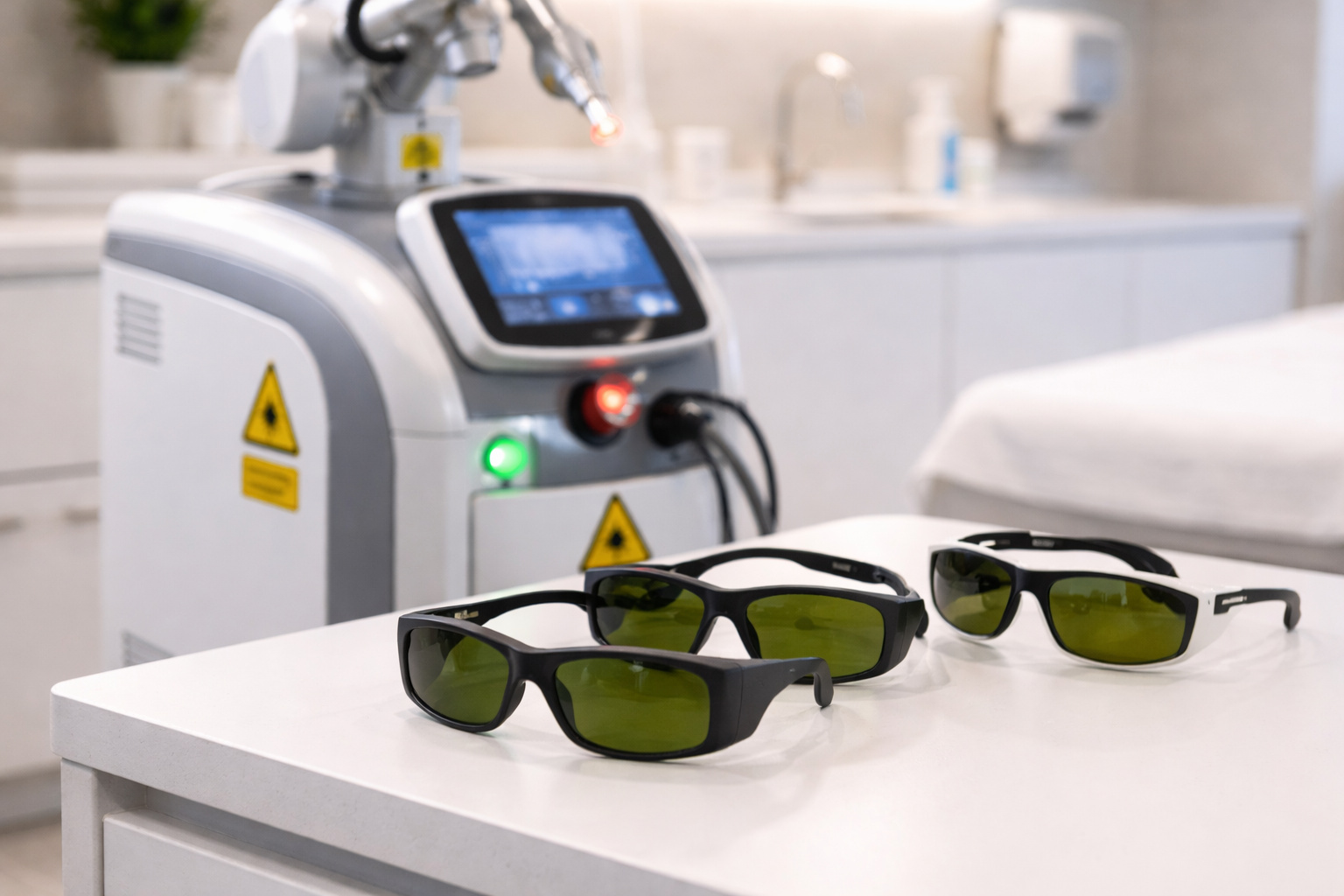
Occupational Safety and Clinical Liability
Occupational safety is one side of the equation. Patient liability is the other.
If a patient sustains eye damage or skin damage during a procedure, documentation will be reviewed immediately. Your laser safety program, laser operator training logs, and Laser Safety Officer certification status will all be scrutinized.
Occupational Safety and Health Administration (OSHA) and malpractice carriers increasingly request proof of laser safety officer training. If certification has lapsed, that fact becomes part of the claim narrative.
I have seen insurance defense hinge not on whether the injury was severe, but on whether the facility could demonstrate structured laser safety compliance.
That is why a complete laser safety program must include:
- Written protocols aligned with ANSI standards
- Verified laser safety training for laser users
- Documented hazard evaluation
- Control measures appropriate for the laser classes in use
- Incident logging and corrective action
This is not administrative theater. It is legal insulation.
How to Prepare for OSHA or Insurance Inspection
Laser safety inspections rarely begin with the laser device itself. They begin with documentation.
Whether triggered by a workplace complaint, an accidental exposure, or a malpractice review, inspectors and insurance auditors evaluate whether the facility can demonstrate structured compliance.
During an inspection, reviewers commonly request:
• A written laser safety program aligned with ANSI Z136.3
• Formal designation of a Laser Safety Officer
• Proof of current LSO certification
• Laser operator training logs
• Hazard evaluation documentation for each treatment room
• Equipment maintenance and calibration records
• Incident logs and documented corrective actions
• Verification of wavelength-specific protective eyewear
Inspectors are not looking for perfect outcomes. They are looking for systematic oversight.
Common compliance failures include:
• Expired LSO certification
• No documented hazard zone calculation
• Missing eyewear optical density verification
• Informal or undocumented staff training
• Lack of written incident response procedures
In many cases, injury severity is secondary. The determining factor becomes whether the facility can show an organized laser safety program that was actively maintained.
Preparation should not begin after an inspection notice arrives.
It should be embedded in daily workflow.
Facilities that maintain structured documentation, conduct periodic hazard reviews, and enforce active oversight rarely struggle during inspection review.
State-by-State Laser Safety Officer Oversight Comparison (2026)
Laser Safety Officer requirements vary significantly by jurisdiction. While ANSI Z136.3 provides the technical standard, state-level regulation determines whether formal LSO designation is explicitly required or implied through supervision mandates.
Below is a general comparison of oversight structures in selected high-activity aesthetic states.
| State | LSO Explicitly Required by Statute? | Delegation Model | Typical Oversight Structure |
|---|---|---|---|
| Arizona | Yes (under medical laser regulation) | Physician delegation with certified technician pathways | Formal LSO designation commonly documented |
| Texas | Implied through laser hair removal rules | Medical delegation required | Structured LSO role strongly recommended |
| California | Not explicitly titled in statute | Physician supervision | LSO designation often required by insurers |
| Florida | Variable (electrology & laser overlap) | Physician or ARNP oversight | LSO role commonly implemented in Class IV facilities |
| New York | Esthetician licensure + medical oversight | Physician on premises | Formal laser safety oversight expected in clinical settings |
| Massachusetts | Medical supervision model | Physician supervision | Written safety program required |
| Illinois | Department of Financial and Professional Regulation oversight | Medical delegation | LSO oversight commonly documented |
| Colorado | No explicit LSO statute | Medical supervision | ANSI-based safety program expected |
Important: Regulations evolve frequently. Some states require formal LSO certification under specific frameworks, while others require compliance through broader medical supervision rules.
Regardless of statutory language, insurers, accreditation bodies, and legal review processes often expect documented Laser Safety Officer oversight when Class 3B or Class IV laser systems are in operation.
Facilities should verify requirements directly with their state medical board or regulatory authority before assuming compliance structure.
Insurance and Liability Implications of LSO Oversight
Insurance carriers increasingly evaluate laser safety programs before issuing or renewing coverage for medical spas operating Class 3B or Class IV systems.
From an underwriting perspective, high-power laser devices represent a predictable injury category. As a result, insurers frequently request documentation demonstrating structured oversight.
In the event of a claim, defense strategy often depends on documentation.
Carriers may request:
• Proof of Laser Safety Officer appointment
• Current LSO certification records
• Written laser safety program aligned with ANSI standards
• Laser operator training logs
• Incident investigation reports
• Equipment maintenance documentation
When documentation is current and structured, defense counsel can demonstrate proactive compliance.
When documentation is incomplete or outdated, that absence becomes part of the liability narrative.
Lapsed certification, missing hazard evaluations, or informal safety practices can influence:
• Claim resolution strategy
• Settlement posture
• Premium adjustments
• Future insurability
In some cases, premium increases follow not because of injury severity, but because the facility cannot demonstrate an active laser safety program.
Insurance carriers are not evaluating perfection. They are evaluating risk management discipline.
A Laser Safety Officer does more than satisfy a standard.
They help reduce institutional risk when properly implemented.
Beam Hazards, Non Beam Hazards, and What Gets Overlooked
Most clinics understand beam hazards. Fewer understand non beam hazards.
Laser plume creates chemical hazards. Alcohol-based prep solutions create fire hazards. Reflections from mirrors or metal instruments create unexpected beam paths.
Laser radiation exceeding Maximum Permissible Exposure limits does not require prolonged exposure. Milliseconds are sufficient.
A safety officer LSO must ensure laser systems are configured correctly, safety features are functional, and staff understand the nominal hazard zone for each device.
That requires more than a passing score on an LSO course. It requires situational awareness.
Facilities seeking structured Laser Safety Officer certification aligned with ANSI Z136.1 and healthcare compliance standards can review our dedicated LSO training program for implementation guidance.
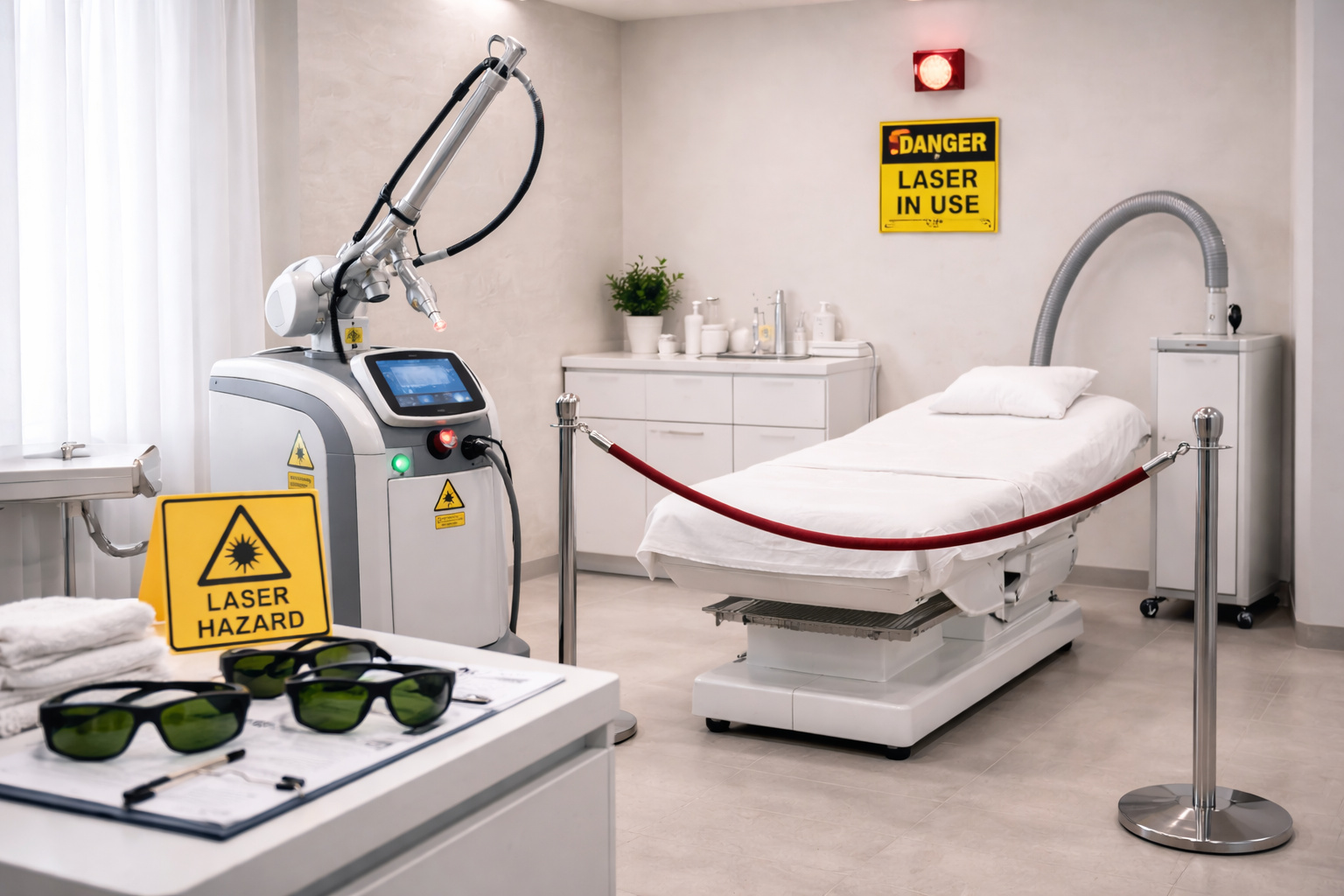
Training in 2026: Online Courses vs Real Oversight
Online training has improved significantly. A structured online course can effectively teach laser safety fundamentals, ANSI standards, and regulatory requirements.
But certification alone does not ensure laser safety.
In my view, laser safety officer training should include scenario-based learning. LSO students should be able to identify unsafe practices immediately. They should understand when to halt laser use.
Industrial laser safety certification principles are valuable, but medical laser environments introduce additional variables: patient movement, variable skin response, cosmetic expectations.
Laser safety in a medspa is dynamic.
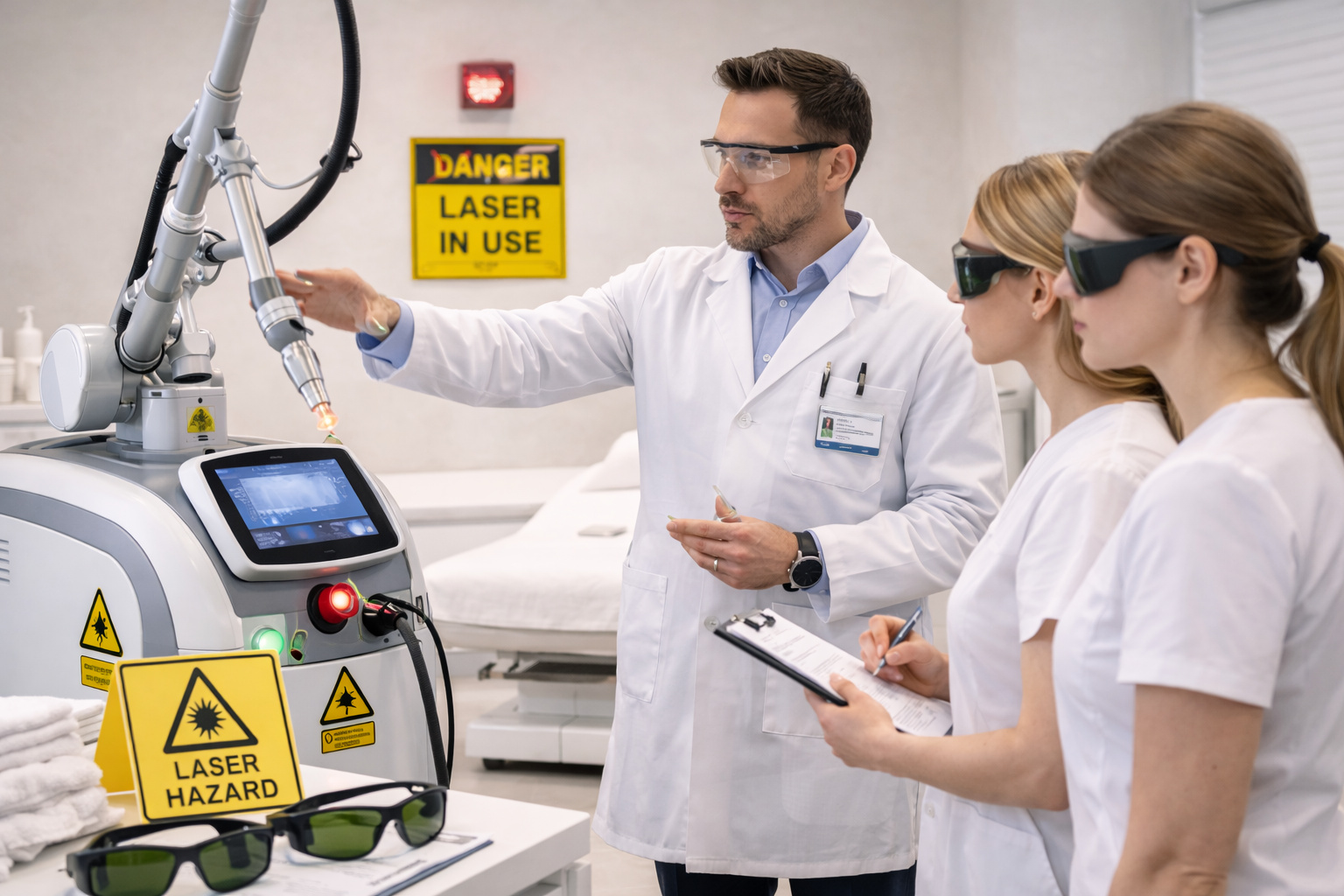
What Medspas Should Do Now
If you operate high power lasers or Class IV medical laser systems, your priorities should be:
- Formally appoint a Laser Safety Officer.
- Complete structured laser safety officer LSO training.
- Maintain a written laser safety program specific to your facility.
- Conduct documented hazard evaluation for each treatment room.
- Ensure personal protective equipment is wavelength-appropriate.
- Log and investigate accidental exposure events.
Do not treat laser safety as an annual checkbox. Integrate it into daily workflow.
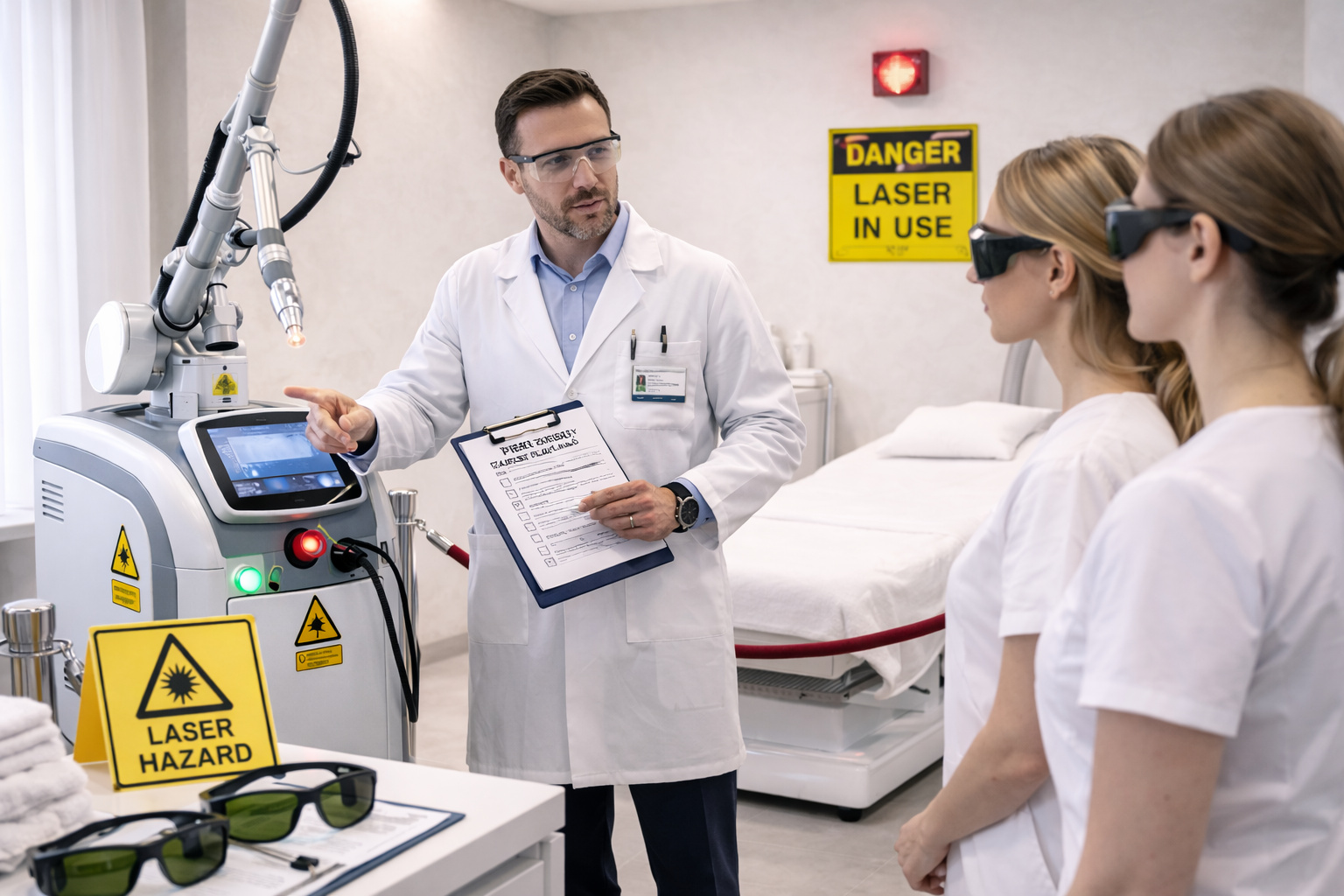
A Culture of Caution: The Future of Laser Safety and Compliance
Lasers are powerful medical devices. They deliver energy with precision. They can also cause permanent damage with equal precision.
Laser safety in 2026 requires more than compliance with safety regulations. It requires a culture where the Laser Safety Officer has authority, where laser users respect beam hazards, and where safe laser use is enforced consistently.
When laser safety fails, the injury is immediate and unforgiving.
And no ANSI citation will undo it.
Laser Safety Officer Salary in 2026
Laser Safety Officers in medical laser environments typically earn higher compensation than standard laser technicians due to their oversight responsibilities and compliance accountability.
In 2026, compensation for Laser Safety Officers varies based on setting, credential level, and geographic location.
General salary ranges:
Compensation varies by region, facility structure, credential level, and scope of responsibility.
• Entry-level LSO (technician + safety oversight): $65,000 – $85,000 annually
• Senior LSO in multi-provider medspa or dermatology setting: $85,000 – $120,000+
• Clinical Director with LSO designation: $100,000 – $150,000+ depending on scope
Facilities operating multiple Class IV systems often assign the LSO role to senior providers or supervisory personnel, reflecting the increased liability and documentation responsibility attached to the position.
Compensation may also include:
• Oversight stipends
• Compliance bonuses
• Administrative salary differentials
• Expanded leadership authority
For a broader breakdown of laser technician compensation by state and credential level, review our full Laser Technician Salary Guide (2026).
2026 Laser Safety Facility Checklist
Medical Spas & Clinical Laser Environments
I. Administrative & Personnel Controls
- A qualified Laser Safety Officer has been formally appointed in writing.
- The facility maintains a current written laser safety program.
- All laser operators have documented training for each device and procedure performed.
- Laser safety education, competency reviews, and refresher training are recorded.
- Standard operating procedures are available for routine use, emergencies, and equipment shutdown.
- Incident-reporting procedures are established for accidental exposure, burns, equipment failure, and near-miss events.
- Staff responsibilities, supervision requirements, and access authorization are clearly defined.
II. Controlled Area & Signage
- Each treatment room has a defined controlled area and nominal hazard zone.
- Laser warning signs are posted at every entrance while the laser is in use.
- Doors remain closed or access-controlled during laser operation.
- Unauthorized staff, visitors, and patients are prevented from entering active treatment areas.
- Reflective surfaces, mirrors, jewelry, and unnecessary metal instruments are removed or covered.
- Windows are protected when necessary to prevent laser transmission outside the controlled area.
- Emergency contact and shutdown instructions are readily visible.
III. Equipment & Engineering Controls
- Laser systems are inspected and maintained according to manufacturer requirements.
- Protective housings, interlocks, emergency stops, and key controls function correctly.
- Only authorized personnel have access to laser activation keys or control systems.
- Device settings, handpieces, delivery systems, and accessories are checked before each procedure.
- Maintenance, calibration, repairs, and service visits are documented.
- Smoke evacuation equipment is available and positioned close to the treatment site when plume may be produced.
- Electrical cords, foot pedals, cooling systems, and grounding components are inspected for damage.
IV. Personal Protective Equipment (PPE)
- Protective eyewear is matched to the laser wavelength and required optical density.
- Eyewear labels remain readable and lenses are free from cracks, scratches, or damage.
- Appropriate eye protection is available for operators, assistants, patients, and observers.
- Patient eye protection is selected according to the treatment area and procedure.
- Gloves, masks, gowns, and other protective equipment are available when clinically appropriate.
- Staff are trained to inspect, clean, disinfect, store, and replace protective eyewear.
- Protective equipment is checked before every procedure.
V. Non-Beam Hazard Management
- Alcohol-based skin preparations are fully dry before laser activation.
- Flammable products and combustible materials are removed from the treatment area.
- Laser plume is controlled with appropriate smoke evacuation and filtration.
- Staff understand the risks associated with plume, electrical hazards, compressed gases, and chemical exposure.
- Fire-resistant drapes or materials are used when appropriate.
- A suitable fire extinguisher is accessible and staff know how to respond to a laser-related fire.
- Infection-control procedures are followed for handpieces, eyewear, surfaces, and reusable accessories.
- Emergency response procedures are established for eye injury, skin injury, fire, electrical failure, and accidental exposure.
Frequently Asked Questions
Do medspas need a Laser Safety Officer in 2026?
If a facility operates Class 3B or Class IV laser systems, ANSI Z136.3 strongly supports formally appointing a Laser Safety Officer and maintaining an active laser safety program. While not all states explicitly mandate an LSO by statute, insurers and inspection reviews commonly expect documented safety oversight.
Is LSO certification legally required by OSHA?
OSHA does not explicitly require a titled “Laser Safety Officer.” However, under OSHA’s General Duty Clause, employers must provide a workplace free from recognized hazards. In high-powered laser environments, appointing a trained LSO is widely recognized as an accepted method of meeting workplace safety obligations.
What is the difference between ANSI and OSHA?
ANSI (American National Standards Institute) publishes technical safety standards such as ANSI Z136.3 for medical laser use. OSHA is a federal regulatory agency with enforcement authority. ANSI defines how laser safety should be structured; OSHA determines whether employers met their duty of care in maintaining a safe workplace.
What are the non-delegable duties of a Laser Safety Officer?
An LSO is responsible for hazard evaluation, confirming operator competency, enforcing wavelength-specific protective eyewear, maintaining documentation, investigating exposure events, reviewing laser equipment safety features, and having authority to suspend procedures when safety standards are not met.
How should a medspa prepare for an OSHA or insurance inspection?
Facilities should maintain a written laser safety program aligned with ANSI standards, documented LSO designation, training logs for all laser operators, hazard evaluations for each treatment room, equipment maintenance records, and incident/corrective action reports. Inspectors typically evaluate whether structured oversight is actively implemented — not merely documented.
What are the biggest laser safety risks in medspas?
The most significant risks include accidental ocular exposure, skin burns from incorrect parameter selection, reflective hazards from metal instruments, fire risk from alcohol-based prep solutions, and airborne exposure to laser plume. Both beam and non-beam hazards must be actively controlled.
How often should laser safety training be renewed?
Many programs recommend renewal every 1–3 years to remain aligned with evolving ANSI standards and regulatory expectations. Additional training should occur whenever devices, treatment rooms, protocols, or staff roles change.
Can online laser safety training be sufficient?
Structured online LSO training can effectively teach ANSI standards, hazard evaluation principles, and documentation requirements. However, certification alone does not ensure compliance. Active facility-level oversight and implementation remain essential.
What documentation should a medspa maintain for laser safety?
Facilities should maintain a written laser safety program, LSO designation records, laser operator training logs, hazard evaluation documentation, equipment maintenance records, PPE specifications by wavelength, and incident reports with corrective actions. Documentation is central during inspection or insurance review.
What happens if a medspa does not appoint an LSO?
In the event of injury, inspection, or insurance review, absence of structured laser safety oversight may increase liability exposure. While statutory requirements vary by jurisdiction, lack of documented oversight can significantly complicate defense posture and regulatory review.
Where can I complete an online Laser Safety Officer course?
You can complete structured training through a dedicated online Laser Safety Course designed for medical aesthetics and clinical laser environments.
Recommended Certification Programs
Proper training is essential before operating cosmetic laser devices, including Laser Safety Officer (LSO) Certification aligned with ANSI and OSHA standards.
Explore our laser certification, licensing requirements, and salary guides to understand your role and responsibilities in the field.
Continue Your Cosmetic Laser Career Research
Explore AML Laser Academy’s core guides on certification, state requirements, and career earning potential.
Laser Technician Certification
Learn how online laser training, safety education, certificates, and professional preparation fit into the certification process.
Explore Certification Requirements → State GuideLaser License Requirements by State
Compare cosmetic laser laws, supervision rules, training expectations, and scope-of-practice considerations across the United States.
View State Requirements → Career GuideLaser Technician Salary Guide
Review salary ranges, career paths, earning factors, and employment opportunities in cosmetic laser and medical aesthetics.
See Salary and Career Data →