Step 1: Meet Basic Eligibility Requirements
Applicants should verify the current eligibility standards before enrolling in a licensing program. Common requirements include meeting the minimum age requirement, completing the required general education level, and providing the documentation required by the school and state.
Career changers may enter the electrology profession without prior medical or aesthetic experience, but applicants should understand that licensure requires formal education, examination, state application, and compliance with ongoing professional standards.
Students with out-of-state or international training should not assume that previous credentials will transfer automatically. Florida may evaluate education, examination history, license status, and active-practice history to determine whether an applicant qualifies through endorsement or another pathway.
Step 2: Complete a Florida-Approved Electrology Training Program
Completing an electrolysis and laser program or an electrolysis program is the first step to legally perform laser hair removal treatments and offer permanent hair reduction. Applicants pursuing Florida electrologist licensure by examination generally complete a council-approved 320-hour electrology training program through a Florida-approved school.
Florida-approved programs may provide a curriculum focused on needle-type epilation or a combined curriculum that includes needle-type epilation, laser, and light-based hair removal education.
The exact program structure matters because it can affect the applicant’s examination route and whether additional laser-specific continuing education or certification is required later.
Before enrolling, confirm:
- The school is currently approved by Florida
- The program is designed for Florida electrologist licensure
- The curriculum includes the modalities you want to practice
- The program prepares students for the current Florida examination
- Hands-on requirements are clearly documented
- Tuition and fees are explained in writing
- Clinical scheduling is realistic for your availability
- Graduation documentation will satisfy the state application
- The school provides accurate information about laser and light-based qualifications
A strong approved electrology curriculum may address:
- Needle-type epilation
- Hair anatomy and growth cycles
- Skin anatomy and physiology
- Infection prevention
- Sterilization and sanitation
- Client consultation
- Medical-history review
- Contraindications
- Electrical principles
- Laser and light-based theory
- Fitzpatrick skin typing
- Patient safety
- Professional ethics
- Documentation
- Florida laws and rules
Step 3: Complete Hands-On Clinical Training
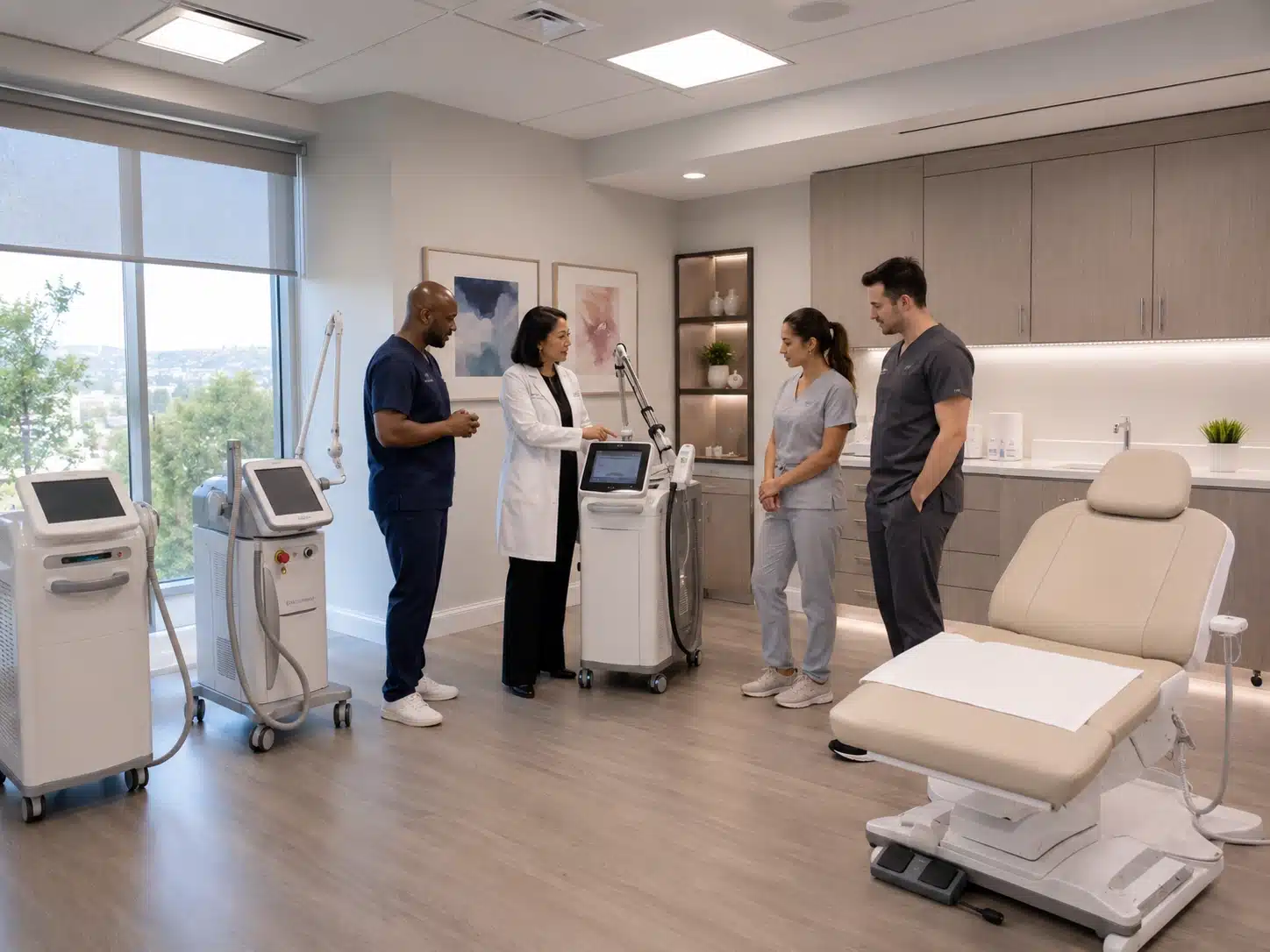
Before registering, confirm the enrollment requirements, tuition, and whether the program includes the specific modalities and hair removal techniques you wish to practice in your aesthetics or beauty career. Florida’s licensing pathway includes hands-on education through an approved school. Online theory can strengthen professional understanding, but it does not replace the supervised practical instruction required for Florida licensure.
Hands-on clinical education may include:
- Client consultation
- Treatment preparation
- Skin and hair assessment
- Needle-type epilation
- Laser and light-based device operation
- Protective eyewear procedures
- Treatment-room safety
- Pre-treatment photography
- Parameter selection
- Clinical endpoint recognition
- Post-treatment care
- Documentation
- Complication response
- Equipment shutdown and maintenance awareness
Students should keep copies of transcripts, attendance records, clinical-hour documentation, competency evaluations, and graduation certificates.
Step 4: Pass the Required Florida Electrology Examination
After completing the required approved education, applicants must pass the examination required for Florida electrologist licensure.
The Florida Department of Health advises graduates of approved 320-hour programs to register for and successfully pass the applicable examination before submitting the state license application.
Applicants should confirm:
- The current examination name
- The correct Florida examination version
- Eligibility requirements
- Registration procedures
- Testing locations
- Examination fees
- Retesting procedures
- Required identification
- Score-reporting procedures
- Whether both electrology and laser/light-based subjects are included
Examination information can change, so use the Florida Department of Health and the official examination administrator as the current sources.
Step 5: Apply for a Florida Electrologist License
After satisfying the education and examination requirements, the applicant submits the Florida electrologist license application, required documentation, and applicable fees.
Applicants should maintain copies of:
- School transcripts
- Graduation documentation
- Examination results
- License application
- Payment confirmation
- Background or disciplinary disclosures, when applicable
- Continuing-education certificates
- Professional certifications
- Physician-supervision documentation
- Written protocols
- Facility records
- Device-training records
Do not begin practicing until the applicable license is active and all required supervision, facility, protocol, and device-training conditions are in place.