
Laser Hair Removal Training Guide: Skills, Safety & Certification (2026)
Laser hair removal remains one of the most requested procedures in medical aesthetics in 2026. It is often marketed as simple, quick, and routine. From the outside, it looks straightforward.
From the inside, it is not.
As someone who supervises laser hair removal technicians in a clinical setting, I can tell you this: the difference between a smooth outcome and a complication often comes down to training.
Laser hair removal training is not about learning how to press a button. It is about understanding how laser energy interacts with skin, how melanin competes for absorption, and how easily improper settings can lead to burns or hyperpigmentation.
If you are considering laser hair removal training or certification, you need more than convenience. You need competence.
Before starting your training, review certification, licensing requirements, and salary expectations to understand your career path in medical aesthetics.
Why Laser Hair Removal Careers Continue to Grow
Laser hair removal dominates the hair removal market because it offers long-term reduction with predictable outcomes when performed correctly.
Medspas, dermatology offices, and plastic surgery practices rely on trained professionals to deliver safe treatments across diverse skin types. Compared with some medical-aesthetics procedures that require specific medical credentials, laser hair removal may offer a faster entry path in some jurisdictions — but it still carries real responsibility.
In 2026, certified laser hair removal technicians commonly earn between $45,000 and $75,000 annually depending on volume, commission structure, and state regulations. Many complete a structured laser hair removal training course within a few days to several weeks, depending on their schedule.
The timeline is short. The responsibility is not.
What Proper Laser Hair Removal Training Should Actually Teach
A comprehensive laser hair removal training program must go far beyond basic device orientation. It should provide a strong foundation in laser physics, skin and hair anatomy, and the principles of selective photothermolysis. Students should understand how different wavelengths interact with melanin, how fluence and pulse duration affect tissue response, and why proper parameter selection is critical for both safety and results.
Proper training should also include Fitzpatrick skin typing, contraindication screening, treatment planning, and recognition of potential adverse reactions. Safety protocols, protective eyewear standards, documentation procedures, and regulatory awareness are essential components of professional practice. Without this deeper education, technicians may know how to operate a machine but not fully understand how to deliver safe, effective treatments in real-world clinical settings.
The Science Behind Hair Removal Laser Technology
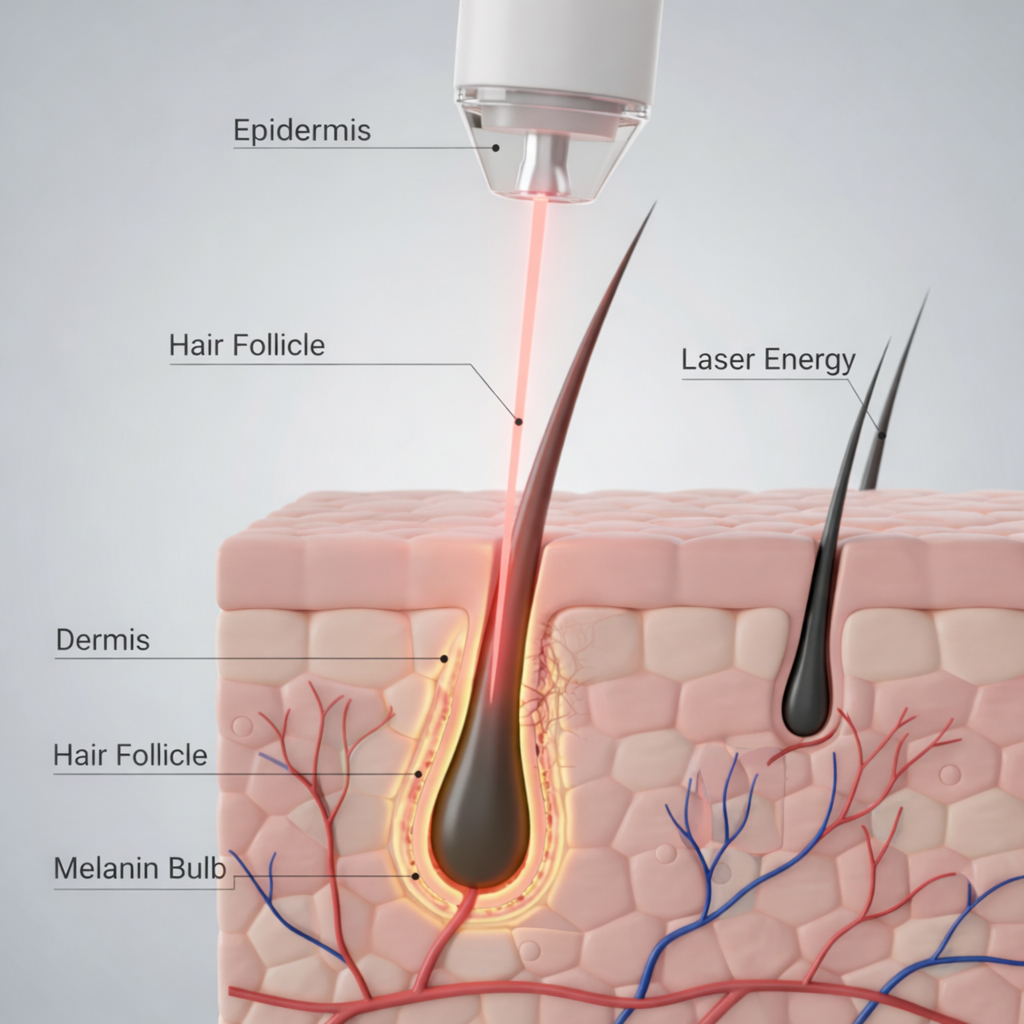
Laser hair removal works through selective photothermolysis. The hair removal laser targets melanin within the follicle. That heat damages the follicle while sparing surrounding tissue — if parameters are chosen correctly.
When settings are too aggressive, I have seen:
Epidermal blistering
Post-inflammatory hyperpigmentation
Hypopigmentation in darker skin types
Paradoxical hair stimulation
When settings are too conservative, patients see no results and lose confidence in the clinic. Training must teach:
How diode, Nd:YAG, and Alexandrite systems differ
Why longer wavelengths are safer for darker skin
How pulse duration affects thermal relaxation time
How spot size changes depth of penetration
If a laser hair removal course does not explain these concepts clearly, it is incomplete.

Fitzpatrick Skin Typing Is Not Optional
Every laser hair removal technician must understand Fitzpatrick skin typing. In practice, this means:
Identifying skin types I–VI accurately
Adjusting energy settings for safe treatments
Recognizing recent tanning as a contraindication
Understanding photosensitizing medications
I have treated patients who developed hyperpigmentation because a technician underestimated how recently they had been in the sun. A comprehensive laser hair removal training program teaches skin assessment before it teaches device settings.
Laser Safety and Real Risk Management
Laser hair removal is considered safe when protocols are followed. That safety depends entirely on training.
Students in a professional laser hair removal certification program should learn:
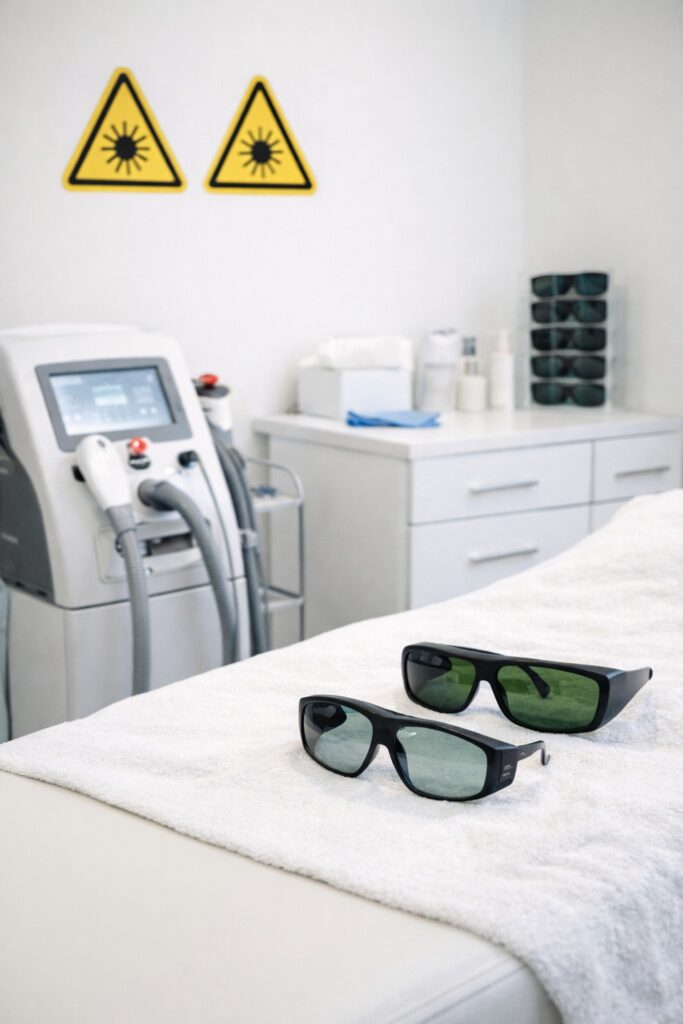
Protective eyewear standards
Room safety protocols
Fire prevention principles
Energy and fluence calculations
Documentation and informed consent
Laser safety is not a footnote. It is central. Technicians who pursue additional Laser Safety Officer training may be prepared for additional safety responsibilities within clinics. More importantly, they understand how to manage risk proactively.
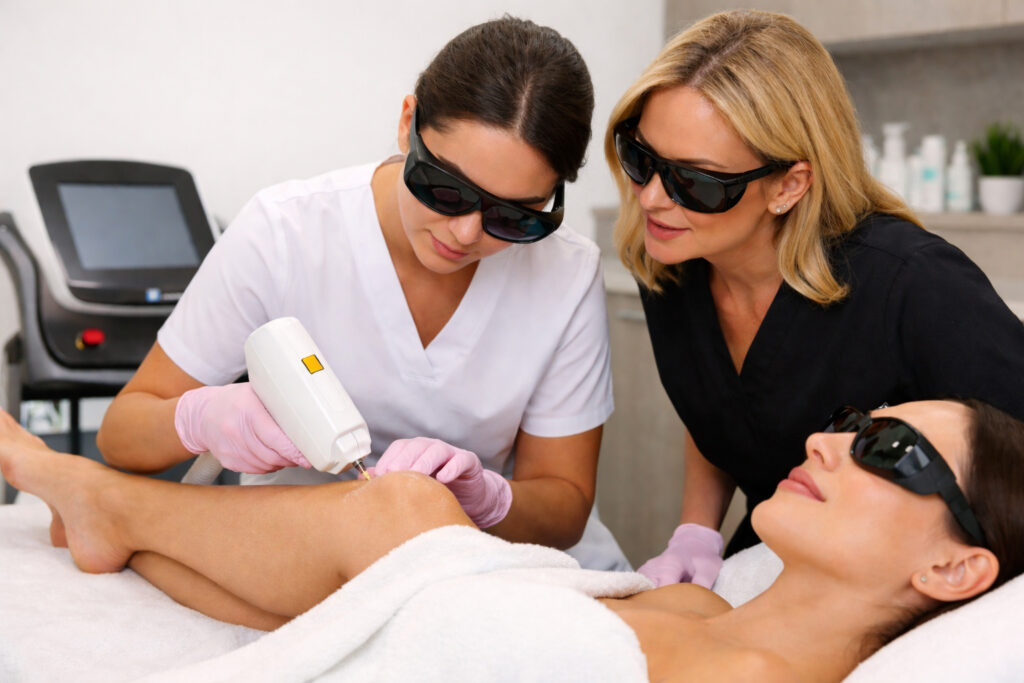
Why Hands-On Training Matters
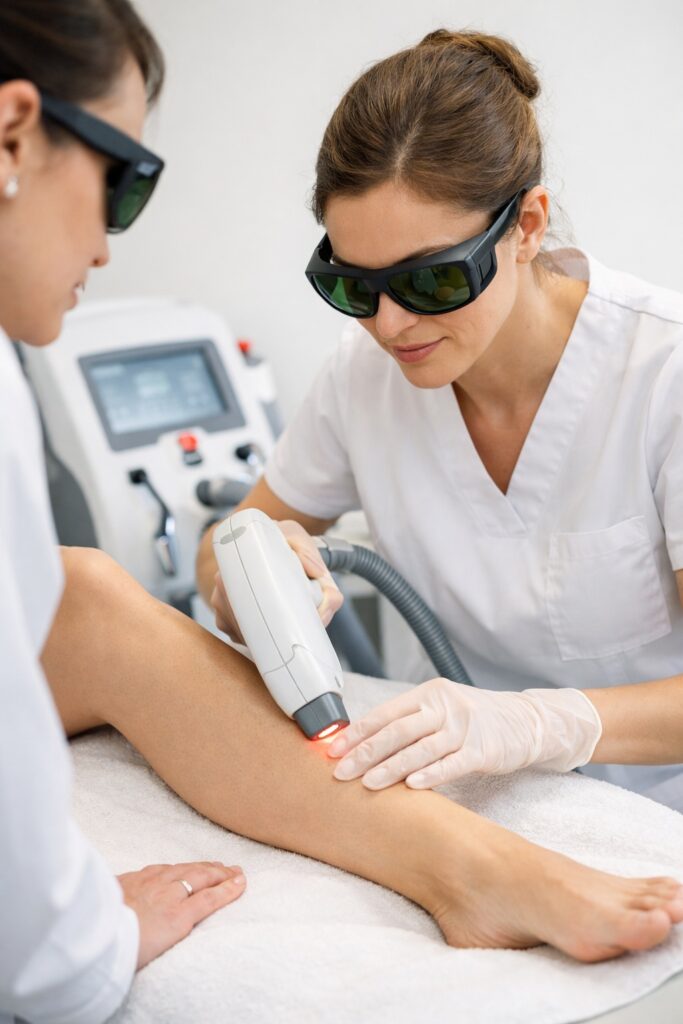
No one becomes competent at laser hair removal by watching videos alone. Hands-on practice is where theory becomes judgment. Where supervised clinical training is required or available, students should:
Perform consultations
Conduct patch tests
Adjust parameters based on skin response
Observe immediate tissue endpoints
Manage post-treatment care
I can always tell which technician completed meaningful hands-on experience. They move more deliberately. They pause before increasing fluence. They reassess between passes. Before enrolling, confirm whether your state, country, employer, or insurer requires supervised clinical practice in addition to online theory.
Online Laser Hair Removal Courses: What to Look For
Online learning has improved access to education. A hybrid laser hair removal training course — online theory combined with in-person hands-on training — is often the most practical option.
The didactic portion should include:
Laser physics fundamentals
Hair growth cycles
Skin anatomy
Safety protocols
Treatment planning
Online education can effectively cover the theoretical portion of training. Hands-on or supervised clinical requirements vary by state, country, employer, and scope of practice, so students should verify the rules that apply where they plan to work.
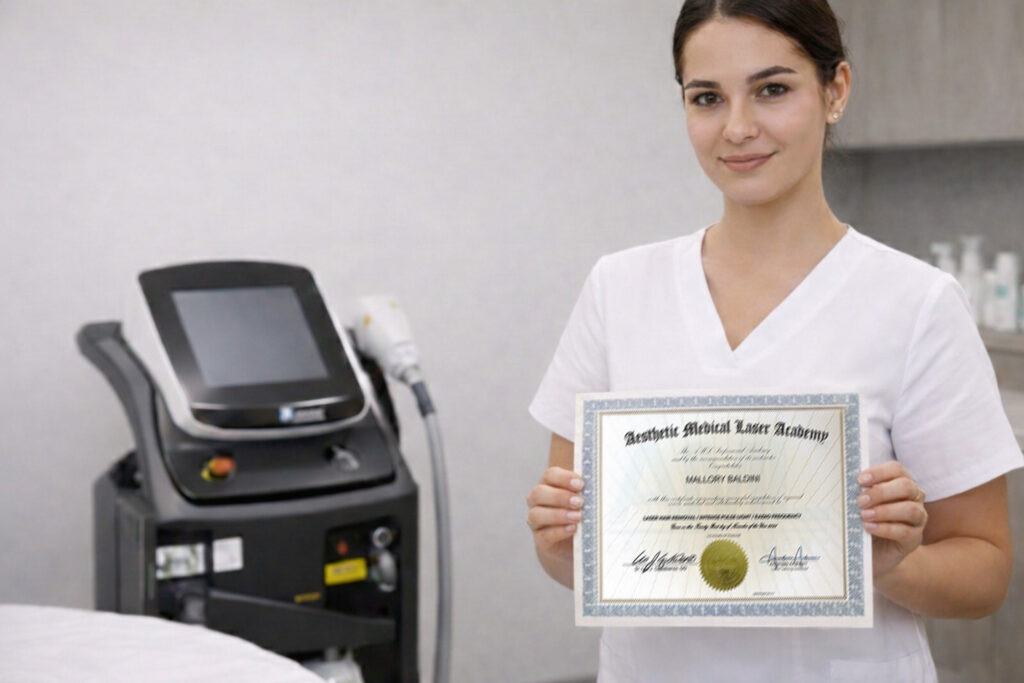
Certification vs Informal Training
There is a meaningful difference between informal device instruction and formal laser hair removal certification.
General device training often includes:
Brief manufacturer tutorials
Limited safety education
No written examination
No practical assessment
Formal training or certification may include:
Structured curriculum
Written evaluations and, where applicable, practical assessments
Formal certificate documentation
Documentation that may support employer or insurer review
A verifiable certificate of completion
Many employers value structured, documented training because it can demonstrate accountability and subject knowledge.
State Regulations and Compliance
Laser hair removal regulations vary widely by state and country, and requirements differ depending on the specific jurisdiction. Some countries have national regulations that apply across the entire country, while others delegate authority to regional or provincial boards. In the United States, requirements are determined at the state level, meaning regulations can differ significantly from one state to another.
In addition, rules may vary depending on the work environment. Regulations can differ based on whether services are performed in a medical spa, physician’s office, dermatology clinic, or other professional setting. Ownership structure and supervision requirements may also impact how services are regulated. For this reason, it is important to review the specific laws and guidelines that apply to the exact location and setting where you intend to work.
Career Growth After Certification
Laser hair removal training often becomes an entry point into broader laser treatments, including laser tattoo removal training. Technicians may expand into:
Photofacial treatments
Skin tightening
Pigment correction
Advanced laser procedures
With experience and additional education, some pursue Advanced Laser Aesthetics Certification credentials or management roles within medical spas. The most successful professionals continue learning long after course completion.
Beyond the Button: Quality Preparation for a Successful Laser Career
Laser hair removal looks simple when performed well. It is not simple.
Behind every effective treatment is a technician who understands laser physics, skin response, safety protocols, and patient expectations. Laser hair removal training should prepare you for real-world responsibility — not just employment.
Choose a laser hair removal training program that provides strong theoretical education, emphasizes safety, and clearly explains any supervised hands-on requirements that may apply in your jurisdiction. In medical aesthetics, speed of entry matters less than quality of preparation. Your reputation — and your patients’ skin — depend on it.
Laser Hair Removal Training: Frequently Asked Questions
Can laser hair removal training be completed online?
The theoretical portion of laser hair removal training can be completed online. AML Laser Academy’s IPL Laser Hair Removal Technician Certification course covers laser physics, skin anatomy, safety protocols, treatment planning, and parameter selection. Hands-on and licensing requirements vary by jurisdiction.
How long does the online laser hair removal course take to complete?
Most students complete the online coursework within a few days to several weeks, depending on their schedule. Flexible access allows learners to progress at their own pace.
Does online laser hair removal training include hands-on practice?
Online programs generally provide the theoretical portion of laser hair removal education. Hands-on clinical practice requirements vary by state, country, and employer. Students should complete any supervised practical experience required under the rules that apply where they intend to work.
What topics are covered in the online curriculum?
The curriculum includes laser physics fundamentals, selective photothermolysis, Fitzpatrick skin typing, contraindications, hair growth cycles, safety standards, fluence concepts, device differences, and general regulatory awareness considerations.
What type of certificate can an online program provide?
A reputable online program may issue a certificate of completion after the student successfully completes the coursework and required assessment. This documents the education completed but does not replace any separate license, supervised practice, or hands-on requirement imposed by a state, country, employer, or regulator.
Are laser hair removal regulations the same everywhere?
Laser hair removal regulations vary widely by state and country, and requirements differ depending on the specific jurisdiction. Some countries have national regulations, while in the United States requirements are determined at the state level. Rules may also vary depending on whether services are performed in a medical spa, clinic, or private practice setting.
Can this training support long-term career growth?
Laser hair removal training often serves as a foundation for expanding into additional energy-based treatments such as IPL, skin rejuvenation, and advanced laser procedures with further education. Many professionals continue building advanced skills throughout their careers.